“It is illegal to wake a sleeping bear to take a photograph”
No Alaska statute specifically makes it illegal to wake a sleeping bear to take a photograph. The statute usually cited for the claim, AS 16.05.783, is titled 'Same day airborne hunting' and governs shooting wolves and wolverines after being airborne. The claim has a real legal kernel, though: AS 16.05.940 defines 'take' to include 'in any manner disturbing' game, and AS 16.05.920 prohibits taking game unless permitted, so deliberately waking a bear - for a photo or anything else - can be prosecuted as an unlawful take.
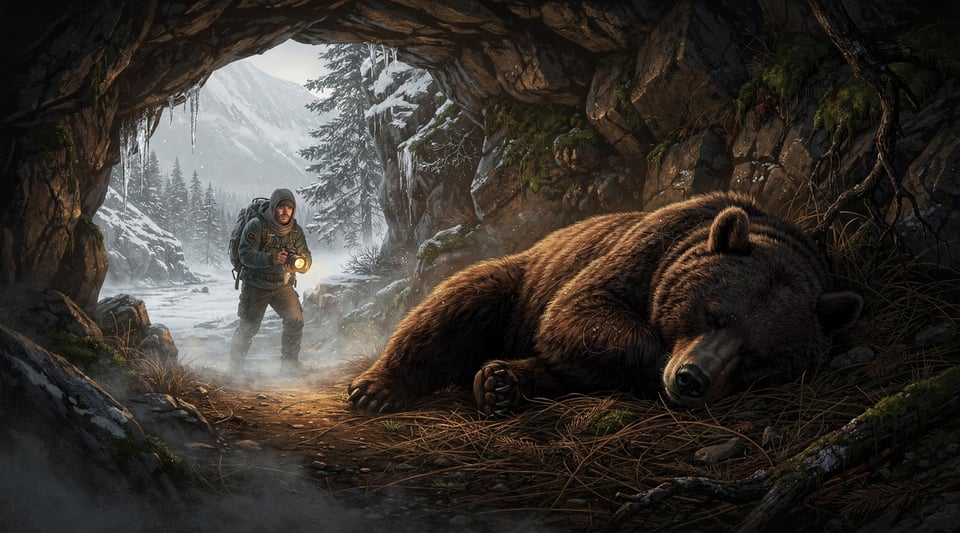
The statute that isn't there
The sleeping-bear rule is a fixture of 'weird Alaska laws' roundups, which assert it without ever citing a statute. When a citation does circulate online, it is AS 16.05.783 - a real section of the Fish and Game Code, but one titled 'Same day airborne hunting.' That section bars shooting a free-ranging wolf or wolverine the same day a person has been airborne, and contains no mention of bears sleeping, waking, or being photographed. Every version of the story traces back to assertion, not to the Alaska statute books.
What Alaska law actually says
The claim is not pure invention, though. AS 16.05.920(a) prohibits taking game unless permitted, and the Fish and Game Code's definitions sweep far wider than hunting: under AS 16.05.940(35), 'take' means taking, pursuing, hunting, fishing, trapping, 'or in any manner disturbing' game. Waking a bear on purpose is disturbing game, and under AS 16.05.925 an unlawful take is a class A misdemeanor. So the folk version gets the substance roughly right and the law entirely wrong: Alaska never wrote a bear-selfie statute, it wrote a general disturbance rule that happens to cover one.
Where the story gets it wrong
The most-repeated version cites AS 16.05.783 as the sleeping-bear law. That statute is real but is titled 'Same day airborne hunting': it governs shooting wolves and wolverines after being airborne, and says nothing about bears sleeping or photography.
Some conclude from the missing statute that waking a bear must be legal. It is not that simple: AS 16.05.940(35) defines 'take' to include 'in any manner disturbing' game, and AS 16.05.920(a) prohibits unpermitted taking, so deliberately waking a bear can still be prosecuted.
The photography angle is pure embellishment. Nothing in the statute turns on why the animal is disturbed - a photo, a dare, or curiosity are all the same disturbance under the take definition.
Unless permitted by AS 16.05 - AS 16.40 or by regulation adopted under AS 16.05 - AS 16.40, a person may not take, possess, transport, sell, offer to sell, purchase, or offer to purchase fish, game, or marine aquatic plants, or any part of fish, game, or aquatic plants, or a nest or egg of fish or game. [AS 16.05.920(a)] 'Take' means taking, pursuing, hunting, fishing, trapping, or in any manner disturbing, capturing, or killing or attempting to take, pursue, hunt, fish, trap, or in any manner capture or kill fish or game. [AS 16.05.940(35)]
- Current status
- Actively Enforced
- Penalty
- There is no penalty for the claim as popularly stated, because no photography-specific statute exists. Unlawfully taking game - which by statutory definition includes disturbing it - is a class A misdemeanor under AS 16.05.925.