“No, Chile Has Never Banned Absinthe — It's Completely Legal There”
The claim that Chile bans the import, sale, or consumption of absinthe is false. No such law exists in Chilean legislation, and absinthe is treated like any other imported distilled spirit under Chile's general alcohol regulatory framework.
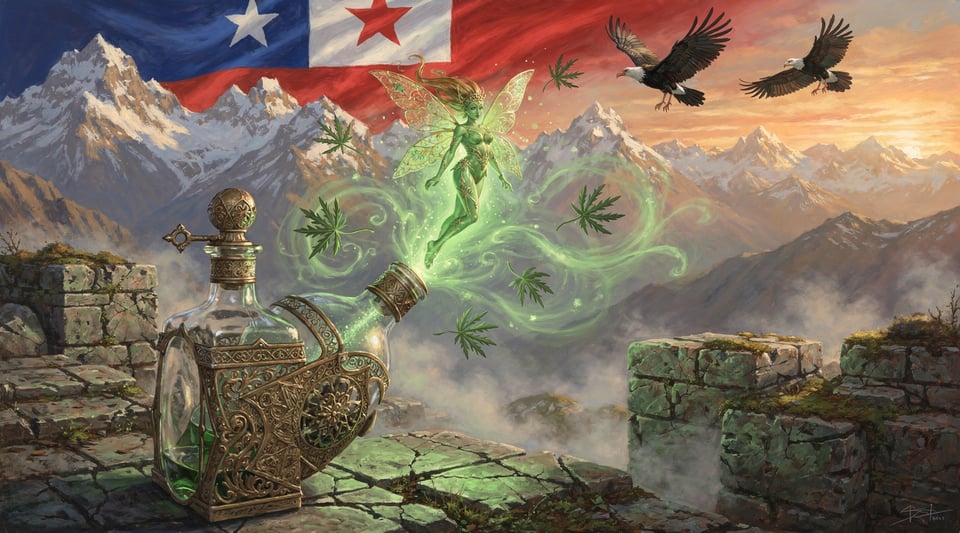
The Absinthe Ban Wave Skipped Chile
Absinthe bans swept through much of the Western world in the early 20th century, fueled by temperance movements, exaggerated health claims about the compound thujone (found in wormwood), and lobbying by the wine industry. By 1915, the USA, France, Switzerland, the Netherlands, Belgium, and others had imposed bans. In South America, Brazil famously banned absinthe in 1906, only re-legalizing it in 1999 under ABV restrictions. Chile, however, was never part of this prohibition wave. The country's alcohol regulations have historically focused on its domestic pisco industry, excise tax structures, and general distribution licensing — never on singling out absinthe.
Where This Myth Likely Originated
The myth likely originates from two sources: the tendency of internet 'weird laws' listicles to conflate Brazil's absinthe ban with other South American nations, and the general assumption that absinthe must have been banned everywhere. In reality, comprehensive research of Chile's official alcohol legislation, USDA Foreign Agricultural Service reports on Chile's distilled spirits market, and the U.S. Alcohol and Tobacco Tax and Trade Bureau's (TTB) Chile trade resource page all describe a standard import and licensing regime with no absinthe carve-out. Wikipedia's detailed country-by-country absinthe legality article — which specifically names over a dozen countries with historical or current bans — makes no mention of Chile whatsoever. Chile simply never banned the Green Fairy.
Where the story gets it wrong
Some assume Chile banned absinthe because Brazil did. Brazil is the only South American country with a documented absinthe prohibition (1906–1999); Chile never enacted a similar ban.
Chile is sometimes lumped in with the broader early-20th-century wave of European and North American absinthe bans. That wave never extended to Chile, whose alcohol laws have never singled out absinthe.
Some listicle sites mistake Chile's general restrictions — such as limits on open-air drinking and age verification — for absinthe-specific rules. These apply to alcohol broadly and are not evidence of any absinthe ban.
No Chilean statute, decree, or regulation banning absinthe has ever been identified. Chile's primary alcohol laws — Ley No. 18.455 (Standards of the Production, Processing, and Marketing of Alcoholic Beverages) and Ley No. 21.363 (Alcohol Control Law) — regulate licensing, labeling, age restrictions, and advertising for all spirits, but contain no absinthe-specific prohibition. Distilled spirits, including absinthe, may be commercially imported after SAG (Servicio Agrícola y Ganadero) registration and quality inspection, and are subject to a 31.5% excise tax.
- Current status
- Unknown
- Penalty
- No law exists; no penalty applicable
- Jurisdiction
- National-level claim — no such law exists at any jurisdiction level in Chile