“Ecuador Does NOT Have a Law Banning Whistling as Catcalling”
It is widely claimed that Ecuador bans whistling at someone as a form of flirtation or catcalling in public. In reality, no such specific law exists — Ecuador's penal code has a significant legal gap when it comes to street sexual harassment.
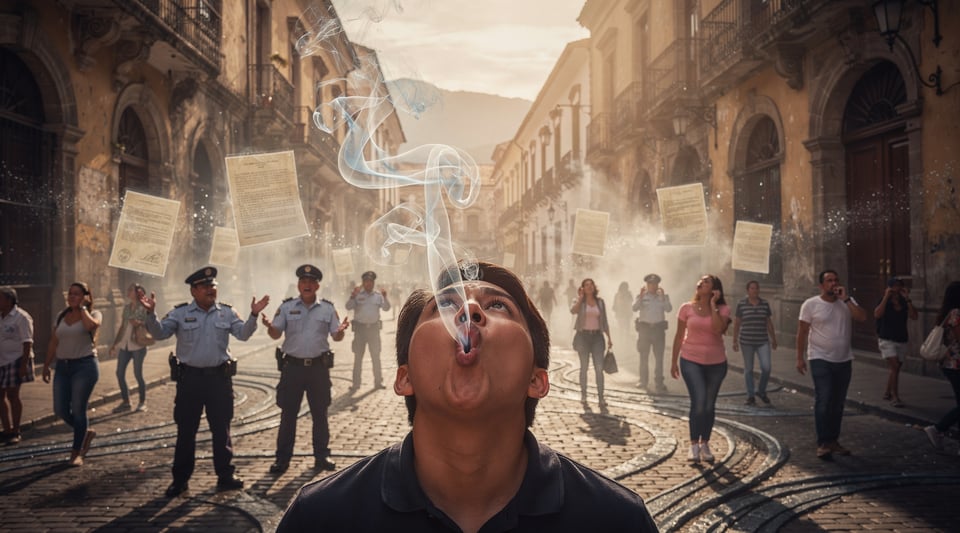
Ecuador's Legal Gap on Street Harassment
Ecuador has a genuine and well-documented problem with street sexual harassment (acoso callejero), and multiple academic papers from Ecuadorian universities confirm that the country's legal framework contains a significant gap. Unlike neighboring Peru (which passed Law No. 30,314 in 2015) or Chile (which legislated against street harassment in 2019), Ecuador has not enacted dedicated anti-catcalling legislation.
Narrowed Scope of the Sexual Harassment Law
Ecuadorian legal scholars note that the COIP's sexual harassment article (Art. 166), after a 2021 reform, narrowed its scope to situations involving a power or authority relationship — making it inapplicable to harassment between strangers.
Where the Whistling Myth Likely Comes From
The claim that whistling at someone is illegal likely originates from confusion with broader gender-based violence laws, wishful misreading of advocacy campaigns, or recycling of unverified 'weird laws' content across the internet.
The 2024 Workplace Law and Cultural Reality
Ecuador did pass a major new law in 2024 (Ley Orgánica Reformatoria para la Erradicación de la Violencia y el Acoso en todas las Modalidades de Trabajo) — but this only covers workplace harassment, not public street behavior. A 2022 Metro Ecuador report highlighted the cultural prevalence of street harassment, noting that 91% of Ecuadorian women surveyed had experienced what it called 'galantería disfarazada de acoso' (harassment disguised as flattery), underscoring how normalized — not criminalized — such conduct remains.
Where the story gets it wrong
People often assume Ecuador has passed aggressive anti-catcalling laws similar to Peru. In reality, Ecuador's sexual harassment law (COIP Art. 166) only applies in contexts of authority or power relationships (e.g., employer–employee, teacher–student), not to street interactions between strangers. The 2024 workplace harassment law is sometimes misread as covering street conduct, but it explicitly addresses only labor contexts.
No specific provision exists in Ecuador's Código Orgánico Integral Penal (COIP) or any other national legislation criminalizing whistling or catcalling in public spaces. COIP Art. 166 (Sexual Harassment) requires a pre-existing authority or hierarchical relationship between perpetrator and victim, explicitly excluding harassment between strangers on the street. COIP Art. 159 (on insults and dishonor) has been theorized by scholars as a possible workaround, but its application to street catcalling has not been established in case law and is considered a legal stretch.
- Current status
- Unknown
- Penalty
- N/A — no such law exists
- Jurisdiction
- Claim was made at national level. The COIP applies throughout Ecuador's national territory. No municipal ordinance specifically targeting public whistling/catcalling was found either.