“Georgia's Alcohol-Free Zones: Real Law, Wrong Country — and No Bus Stops”
The claim that 'Georgia' bans alcohol sales within 100 meters of schools and public transportation stations is a mix-up: the U.S. state of Georgia has a genuine law prohibiting alcohol sales near schools (measured in yards, not meters), but the country of Georgia has no verified equivalent national statute — and neither law covers public transportation stations.
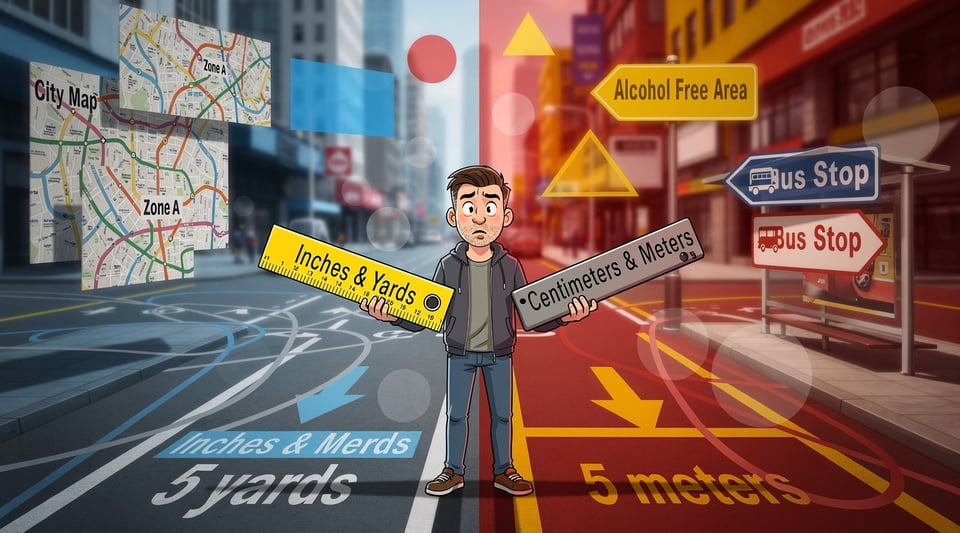
The Real U.S. State Law
The U.S. state of Georgia has a long-standing, fully enforceable statute (O.C.G.A. § 3-3-21) restricting the sale of alcohol near schools and churches — a law with roots going back to at least 1954, when predecessor code § 58-724 prohibited sales within 100 yards of churches, schools, or college campuses. Over the decades, the law was refined to distinguish between distilled spirits (stricter: 200 yards from schools) and beer/wine (100 yards). Crucially, distances are measured in yards, not meters, and the protected sites have never included public transportation stations.
How the Country Got Blamed
This claim is a classic 'weird law' telephone-game mutation. Somewhere in the 'weird laws' content pipeline, this authentic U.S. state law appears to have been misattributed to the Caucasus nation of Georgia. The addition of 'public transportation stations' is a further fabrication not found in any verified text of the U.S. state's law.
Enforcement and Local Variation
The Georgia Attorney General's office has issued opinions (e.g., Unofficial Opinion 2002-5) clarifying how distances are measured under § 3-3-21, confirming the law is actively administered and enforced by the Georgia Department of Revenue's Alcohol & Tobacco Division. Local authorities may also enact stricter distance requirements than the state minimum, but they cannot go below it.
Where the story gets it wrong
Some believe the law applies to the country of Georgia and uses metric distances; in fact it applies to the U.S. state of Georgia and measures distances in yards (100–200 yards), not meters.
Public transportation stations are not listed as protected sites anywhere in the U.S. state law; only schools and churches are covered under O.C.G.A. § 3-3-21.
It's often assumed the distance rule applies uniformly and without exception, but distilled spirits require a 200-yard buffer from schools while beer and wine require only 100 yards, churches carry a 100-yard buffer for spirits only, and hotels with 50+ rooms, private clubs, and some on-premises licensees are exempt.
U.S. State of Georgia — O.C.G.A. § 3-3-21 (2024): 'No person knowingly and intentionally may sell or offer to sell: (A) Any distilled spirits in or within 100 yards of any church building or within 200 yards of any school building, educational building, school grounds, or college campus; (B) Any wine or malt beverages within 100 yards of any school building, school grounds, or college campus.' Distances are measured by the most direct route of travel on the ground. The law contains exemptions for hotels of 50+ rooms, bona fide private clubs, and on-premises licensees subject to local regulation. No corresponding provision covers public transportation stations in either the U.S. state or the country of Georgia.
- Current status
- Actively Enforced
- Enacted
- January 1, 1981
- Penalty
- Under the U.S. state of Georgia's law, violations can result in license suspension or revocation by the Georgia Department of Revenue. Specific fine amounts are set at the local level; state law establishes the distance minimums as a condition of licensing.
- Jurisdiction
- Claim is attributed to the country of Georgia (Caucasus, ISO: GE), but the real law exists in the U.S. state of Georgia (ISO subdivision: US-GA). No national-level statute matching this claim was located for the country of Georgia via its official legal portal (matsne.gov.ge) or secondary sources.