“Honduras Can Jail Civilians Up to 8 Years for Wearing Military Clothing”
Honduras prohibits civilians from wearing military or police-style clothing, including camouflage, with penalties of up to 8 years imprisonment. However, the law is primarily an anti-impersonation measure targeting criminal gangs — not a simple 'authorization required' dress code.
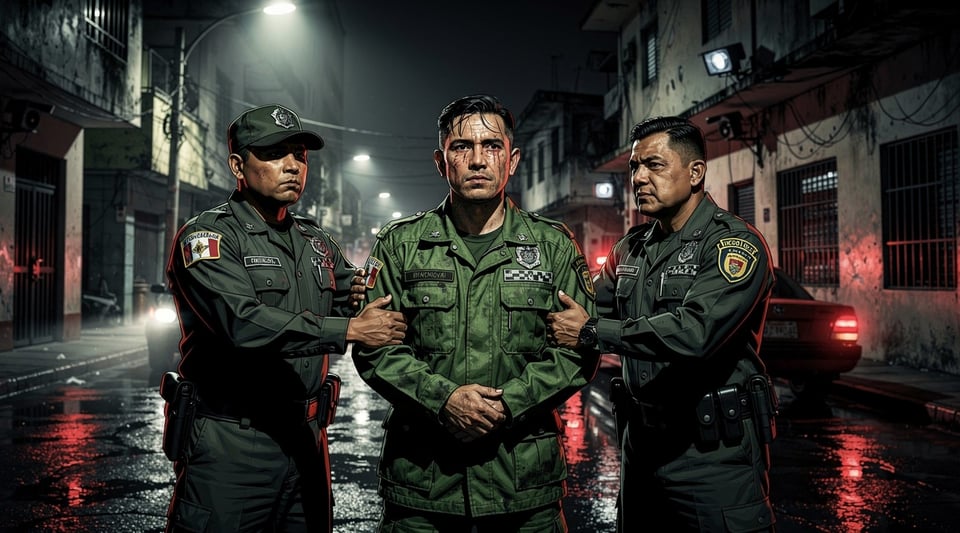
Gang violence prompted the crackdown
Honduras's law against civilians wearing military-style clothing emerged directly from the country's gang crisis. Criminal organizations — particularly MS-13 (Mara Salvatrucha) and Barrio 18 — had been dressing members in stolen or counterfeit Army and National Police uniforms to commit crimes, carry out extortion, and terrorize communities while evading detection. In operations conducted by FUSINA (the Inter-Institutional Security Force) in 2013 and 2014, multiple criminals were captured or killed while dressed in military or police gear.
The 2014 reform has since been swept away
In May 2014, at the request of military authorities, Congressman Tomás Zambrano of the National Party brought a reform to the National Congress that would bar civilians from manufacturing, selling or wearing police and military dress, with FUSINA empowered to detain offenders for a minimum of 24 hours. Honduran newspapers reported a penalty of five to eight years. That reform amended the 1983 Penal Code (Decreto 144-83) — and Article 634 of the current Penal Code, Decreto 130-2017, abrogated Decreto 144-83 "y todas sus reformas." The 2014 text is therefore no longer the operative law, and the constitutional hook the press cited, Article 292 of the Constitution, governs arms and munitions rather than clothing.
What Article 473 actually punishes
The prohibition now lives in Article 473 of the Penal Code, in the chapter on usurpation of functions and personal falsehoods. It reaches anyone who "without being authorized publicly uses uniform, insignia or equipment belonging exclusively to the State's Security and Investigation Corps or the Armed Forces" — two to four years in prison, or a fine of 200 to 400 days. Eight years is the ceiling only for the aggravated form, where the uniform is used to facilitate or conceal a crime. The word "exclusively" does the work: the code never mentions camouflage print, so ordinary camouflage fashion is not what the article describes.
Where the story gets it wrong
The eight-year figure is not the penalty for simply wearing military clothing. Article 473 sets two to four years, or a fine, for unauthorized public use; the four-to-eight-year range applies only when the uniform, insignia or equipment is used to facilitate or conceal a crime.
This is not a camouflage ban in the Caribbean sense. The Penal Code never uses the word camuflaje; Article 473 reaches only uniforms, insignia and equipment belonging exclusively to the security forces, so it functions as an anti-impersonation statute rather than a dress code.
Honduras does not appear on the standard international lists of countries banning civilian camouflage, and neither the U.S. State Department nor the UK FCDO travel advisories for Honduras flag a clothing prohibition — unlike their advisories for Jamaica or Barbados.
- Current status
- Actively Enforced
- Enacted
- May 10, 2019
- Penalty
- Under Article 473 of the Penal Code, wearing a uniform, insignia or equipment belonging exclusively to the police or Armed Forces in public without authorization carries two to four years' imprisonment or a fine of 200 to 400 days. The penalty rises to four to eight years only where the uniform, insignia or equipment is used to facilitate or conceal a crime; mere possession for that purpose carries two to four years. The statute does not mention camouflage print as such — the item must belong exclusively to the security forces.
- Jurisdiction
- National law applying throughout Honduras. Decreto 130-2017 was published in La Gaceta No. 34,940 on 10 May 2019 and, after successive postponements, entered into force on 25 June 2020; it abrogated the 1983 Penal Code and all of its reforms, including the 2014 military-clothing reform. The State of Exception (declared December 2022, still active as of 2026) applies across 226 of 298 municipalities and grants expanded stop-and-detain powers.