“Hungary Requires Natural Light in Rentable Rooms — But It's Not Quite That Simple”
Hungarian building codes do require that rooms intended for prolonged human occupancy have direct natural lighting with a specific glazing-to-floor-area ratio. However, this is a construction standard enforced at the design and building stage — not a landlord-specific rental obligation carrying direct fines against landlords for existing tenancies.
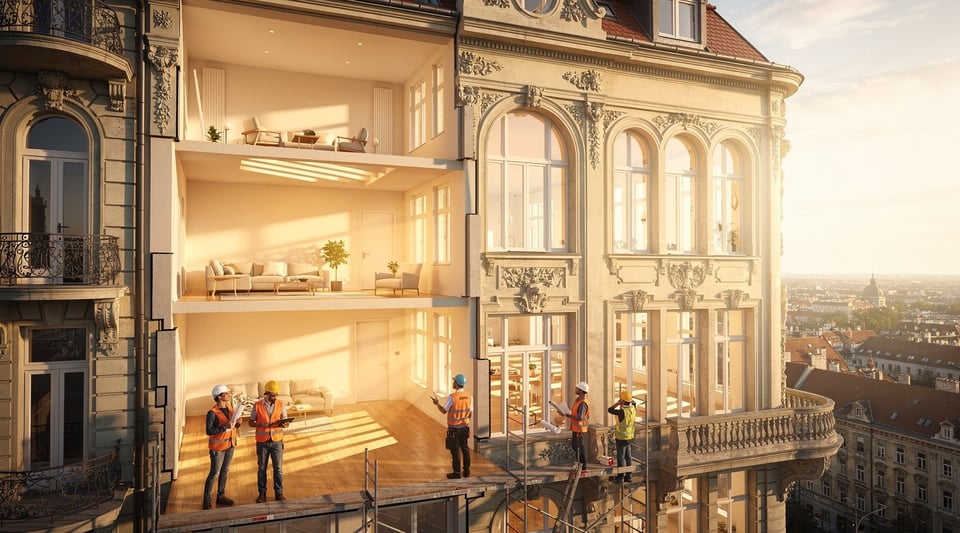
Public health origins of the lighting rule
Hungary's building regulations have long included habitability standards rooted in public health concerns dating back to the early 20th century, when dense urban housing in Budapest was associated with tuberculosis and other diseases exacerbated by lack of sunlight and ventilation. The OTÉK (Országos Településrendezési és Építési Követelmények — National Urban Planning and Building Requirements), first codified as Government Decree 253/1997, embedded the requirement that rooms where people spend extended time must receive direct natural light at a minimum glazing-to-floor ratio. This public health measure applies to architects, developers, and building authorities at the point of design and construction.
A building code, not a tenancy rule
As of January 1, 2025, OTÉK has been replaced by TÉKA (Government Decree 280/2024), which continues similar principles. The claim that landlords face specific fines for failing to provide natural light appears to be a conflation: building code violations can indeed lead to fines and even demolition orders — but these are enforced against developers/owners by building authorities, not specifically against landlords in a tenancy context. Hungarian tenancy law (the Housing Act and Civil Code) is notably flexible, giving parties significant contractual freedom. Legal experts consistently note that mandatory landlord obligations in the tenant-landlord relationship focus on maintenance, repair, and structural upkeep — not a stand-alone 'natural light window' rule with a dedicated fine regime for landlords.
Where the story gets it wrong
Many assume the natural light rule is a landlord-specific obligation with direct fines under tenancy law. In reality, it is a building code standard enforced at the design and construction phase by building authorities. Landlords of existing properties are not fined directly under a 'natural light' provision in the Housing Act; violations of construction standards result in fines or orders against builders and developers instead.
The rule is sometimes treated as an absolute requirement for every room. In fact, OTÉK/TÉKA permits exceptions and indirect lighting in some circumstances, and below-ground rooms are fully exempt from the natural light requirement.
Hungary's national building code (OTÉK, Government Decree 253/1997, now replaced by TÉKA, Government Decree 280/2024) requires that rooms used for prolonged occupancy ('huzamos tartózkodásra szolgáló helyiség') must have direct natural lighting, with the glazing-to-floor-area ratio of at least 1:8 for general habitable rooms (1:6 for educational rooms). Below-ground rooms are exempted. This is a construction/design-phase standard. Separately, the Housing Act (Act LXXVIII of 1993) and Civil Code (Act V of 2013) govern landlord obligations, which include keeping dwellings fit for their intended use, but do not specifically mandate a 'minimum one natural-light window' obligation on landlords in existing tenancies.
- Current status
- Actively Enforced
- Enacted
- January 1, 1997
- Penalty
- Building code violations (construction-phase) can result in fines and orders from building authorities, including potentially ordering remedial works or demolition. No specific fine regime exists targeting landlords for natural light violations in an active tenancy under the Housing Act.
- Jurisdiction
- National-level building and housing law applicable throughout Hungary. Local municipalities may add further requirements via local building codes (HÉSZ).