“It's Illegal to Be Drunk in a British Pub — Yes, Really”
Under Section 12 of the Licensing Act 1872, it is a criminal offence to be found drunk on any licensed premises in England and Wales — including pubs, bars, and beer gardens. The law is still on the statute books today, though it is rarely enforced.
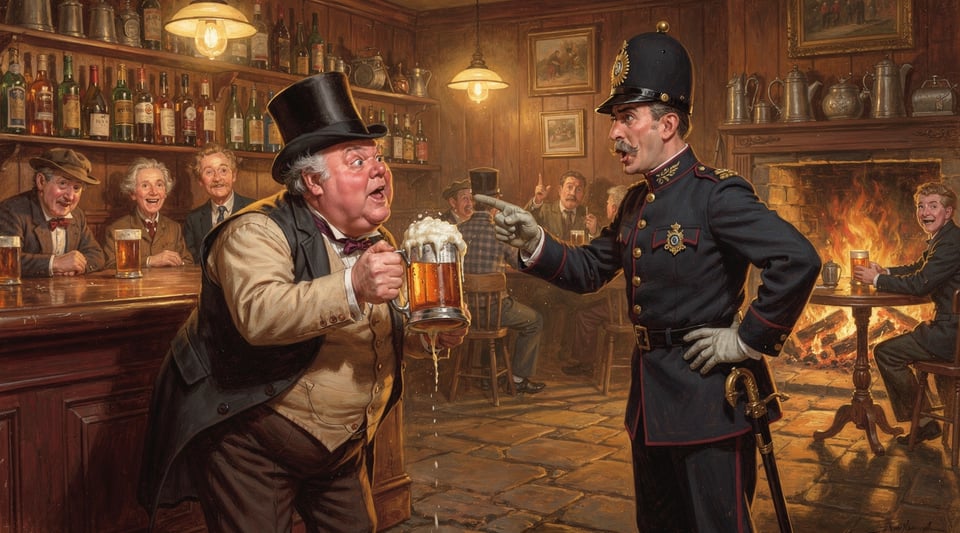
Victorian Moral Panic And Political Compromise
The Licensing Act 1872 was born from Victorian Britain's fierce moral panic about alcohol. Introduced by Liberal Home Secretary Henry Austin Bruce under Prime Minister William Gladstone, the Act was a compromise between the powerful temperance movement — which wanted outright prohibition — and the trade interests that fought to protect pubs. Victorian-era anxieties about alcohol-related crime, poverty, and family breakdown drove the legislation, which reflected the rising influence of temperance advocates who saw working-class drinking as a social catastrophe. It was deeply unpopular with the working class, whose primary social spaces were pubs, while the middle and upper classes had private clubs where drinking faced no such restrictions.
Section 12 Still In Force Today
Over 150 years later, most of the 1872 Act has been superseded by more modern licensing legislation, but Section 12 — the 'drunk in public' provision — remains in force across England and Wales. The maximum penalty has been updated to Level 1 on the standard scale. Scotland, which was excluded from the original Act, now has equivalent provisions under the Licensing (Scotland) Act 2005. The law is rarely enforced against pub patrons simply for being merry.
Where the story gets it wrong
The claim is often stated as applying only to pubs, but Section 12 is broader: it covers any highway, public place (whether a building or not), or licensed premises — not just pubs and bars.
The law is frequently dismissed as a quirky historical oddity with no modern relevance, but it remains a live statute, confirmed up-to-date as of April 2026.
Scotland was excluded from the original 1872 Act; it now has equivalent provisions under the Licensing (Scotland) Act 2005, Section 111. Northern Ireland was covered until the Act was repealed there in 1980.
Section 12 of the Licensing Act 1872 states: 'Every person found drunk in any highway or other public place, whether a building or not, or on any licensed premises, shall be liable to a penalty not exceeding level 1 on the standard scale.' A separate provision under the same section makes it an offence to be drunk while in charge of a carriage, horse, cattle, steam engine, or loaded firearm. Section 13 of the same Act also makes it an offence for a licensee to permit drunkenness on their premises. Additionally, the Licensing Act 2003 makes it an offence for bar staff to serve alcohol to a person who is already drunk or disorderly.
- Current status
- Rarely Enforced
- Enacted
- August 10, 1872
- Penalty
- Up to £200 fine (Level 1 on the standard scale) for being drunk on licensed premises or in a public place. Aggravated offences (e.g. drunk in charge of a horse, carriage, or loaded firearm) carry up to £200 fine or up to 51 weeks imprisonment.Fine: up to GBP200Imprisonment: 357 days
- Jurisdiction
- Applies to England and Wales under the Licensing Act 1872. Scotland has equivalent provisions under the Licensing (Scotland) Act 2005, Section 111. Northern Ireland had the law repealed in 1980.