“Israel Banned Pig Farming Nationwide — But the Story Is Messier Than You Think”
Israel's 1962 Pig-Raising Prohibition Law bans raising, keeping, or slaughtering pigs across the entire country — not just within city limits. The ban is national in scope but includes a carve-out for towns with large Christian populations.
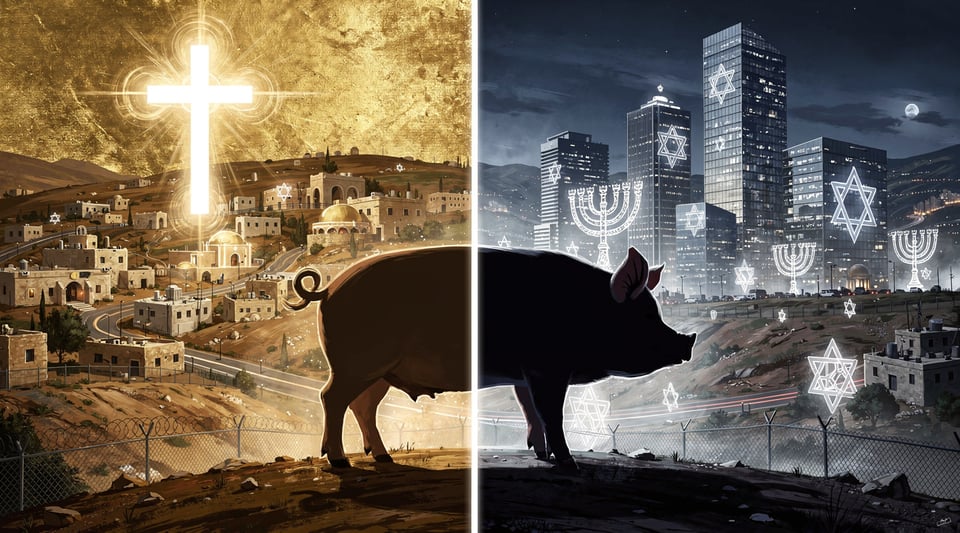
Religious and national roots of the ban
Few laws in modern Israeli history have stirred as much political passion as the rules around the pig. The prohibition runs far deeper than religious dietary law: it is entwined with Jewish collective memory, nationhood, and the recurring question of how Jewish a Jewish state should be. When Israel was founded in 1948, even secular Zionist leaders agreed that pigs had no place in the new country - partly as a religious symbol, but also because enemies of the Jewish people, from Hellenistic Greeks to Russian tsarists, had long used pork as a tool of persecution.
Passage of the 1962 law
By the early 1960s, pig farming had actually reached its peak, with tens of farms operating near Tel Aviv, Haifa, and even Jerusalem. Religious parties pushed hard for a total ban, and the Knesset adopted the Pig-Raising Prohibition Law on 23 July 1962 by a vote of 42 to 15; it took effect a year later. However, to avoid appearing to impose Jewish religious law on non-Jews, lawmakers carved out an exemption for Christian communities - chiefly in the Galilee. The Annex to the law named nine localities where pigs could still be raised: Nazareth, I'billin, Kafr Yasif, Mi'ilya, Rameh, Gush Halav, Eilabun, Fassuta and Reineh.
Court battles and modern pork consumption
A further twist: Israel's Supreme Court has repeatedly been drawn into pig-related litigation, most famously in Solodkin v. Beit Shemesh Municipality (2004), where it examined whether municipal bylaws banning pork sales were constitutional. The 1990s influx of Russian immigrants who were accustomed to eating pork added a fresh wave of pressure on local authorities. Today pork remains legally available in Israel but occupies a uniquely complicated cultural space - euphemistically called 'white meat' in Hebrew.
Where the story gets it wrong
The claim is often stated as 'pig raising is illegal within city limits,' but this is misleading — the 1962 Pig-Raising Prohibition Law applies nationwide, not merely within cities or municipal zones.
The law is often treated as a total prohibition, but it explicitly exempts areas with predominantly Christian populations, including Nazareth and surrounding Galilee towns, where pig farming remains legal.
The 'city limits' framing likely stems from a separate 1956 law governing pork sales at the municipal level. Pigs are still raised, and pork is still sold and consumed, in Israel today.
Section 1 of the Pig-Raising Prohibition Law, 5722-1962 provides that a person shall not raise, keep or slaughter pigs, section 8 defining slaughter as any killing for the purpose of eating. Section 2 disapplies that ban in two situations: within the boundaries of the localities listed in the Annex to the Law, and for the raising, keeping and slaughter of pigs in scientific and research institutions and in public zoos. The Annex as enacted named nine Galilee localities with substantial Christian populations - Nazareth, I'billin, Kafr Yasif, Mi'ilya, Rameh, Gush Halav (Jish), Eilabun, Fassuta and Reineh - and section 11 empowers the Interior Minister to strike a locality from the Annex at its own council's request; Reineh has since been removed, leaving eight. Section 3 sets a fine of 10,000 Israeli lirot for breaching section 1, and section 4 a fine of 5,000 lirot for an owner who lets premises knowing they will be used to raise, keep or slaughter pigs. Section 10 amends the parallel Local Authorities (Special Authorization) Law, 5717-1956: from the 1962 Law's commencement the words "raising and keeping of pigs" are deleted from section 1 of that Law, which now leaves a local authority "competent to enact a bylaw that will restrict or prohibit the sale of pig meat and meat products that are intended for consumption". The 1962 Law was adopted by the Knesset on 23 July 1962 and came into force a year later.
- Current status
- Rarely Enforced
- Enacted
- July 23, 1962
- Penalty
- Section 3 of the 1962 Law sets a fine of 10,000 Israeli lirot for raising, keeping or slaughtering pigs in breach of section 1; section 4 sets a fine of 5,000 lirot for an owner who lets premises knowing they will be used for pigs. Both figures are as printed in the original Sefer HaChukkim text and carry no amendment marker. Contemporaneous press coverage reported the fines an order of magnitude lower, which the enacted text does not support; this entry follows the statute. The lira was withdrawn as Israel's currency in 1980; modern shekel equivalents, set by the general fine-updating provisions of Israeli penal law, were not confirmed.
- Jurisdiction
- National law applying throughout Israel, subject to an Annex of exempt localities - nine Christian-majority Galilee towns as enacted, eight today after Reineh was struck under section 11 - and to exemptions for scientific and research institutions and public zoos. Pork sales are governed separately: section 10 of the 1962 Law narrowed the Local Authorities (Special Authorization) Law, 5717-1956 so that a local council may restrict or prohibit only the sale of pig meat and its products within its boundaries, not the raising of pigs.