“New Zealand Can Reject Baby Names That Might Offend a Reasonable Person”
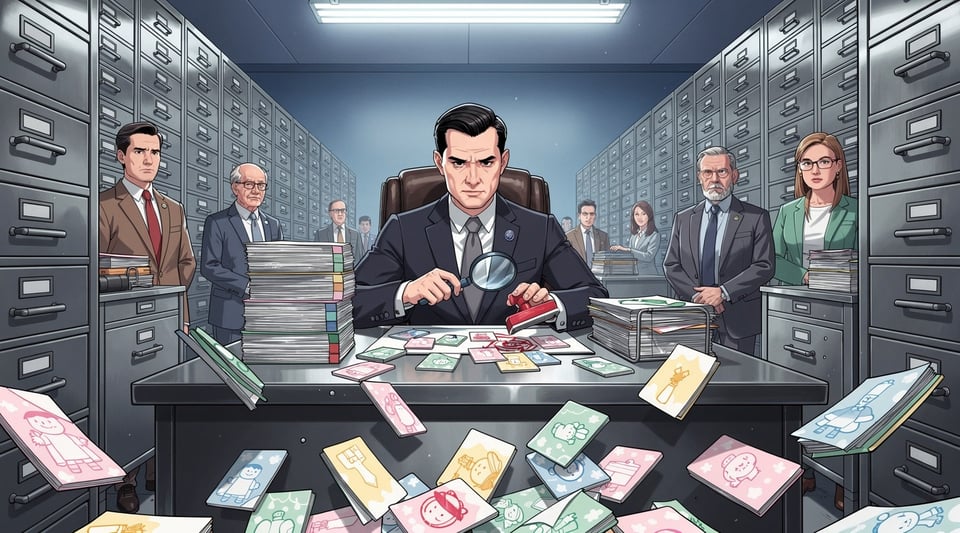
New Zealand's Registrar-General has the power to decline registration of baby names deemed undesirable in the public interest, including names that might cause offence to a reasonable person, are unreasonably long, or resemble official titles or ranks without justification.
Origins of the naming law
New Zealand's baby naming law came into force in 1995 with the Births, Deaths, Marriages, and Relationships Registration Act—making it relatively modern legislation that didn't exist in earlier registration acts dating back to 1908. The provision was designed to protect children from names that could cause lifelong embarrassment or social handicap.
The Talula Does the Hula case
The law gained international attention in 2008 when Family Court Judge Rob Murfitt made a 9-year-old girl named 'Talula Does the Hula From Hawaii' a ward of the court so her name could be changed. The girl had been so embarrassed she told friends to call her 'K.' The judge condemned the parents' 'very poor judgment,' stating the name 'makes a fool of the child and sets her up with a social disability.'
Rejected and approved names
Each year, New Zealand's Department of Internal Affairs releases lists of rejected names—recent examples include Lucifer (rejected 6 times), King, Prince, Royal, Saint, and even '4Real.' However, some eyebrow-raising names have been approved, including 'Number 16 Bus Shelter,' 'Midnight Chardonnay,' 'Violence,' and twins named 'Benson and Hedges.' Of nearly 60,000 annual births, less than 1% require personal review by the Registrar-General. The system uses a watchlist that includes offensive words in multiple languages, titles and ranks, and symbols/numbers.
2021 legislative update
A 2021 Act update replaced the 1995 law but maintained the same naming criteria, now codified in Section 18(4).
Where the story gets it wrong
The claim states names must not be 'obscene, offensive, or likely to cause offense to a reasonable person of any ethnic or national origin.' While this captures the spirit of the law, the actual statute uses the phrase 'might cause offence to a reasonable person' without explicitly mentioning 'obscene' as a separate category or specifically referencing ethnic/national origin.
The law is also commonly misunderstood as having a list of 'banned' names—officials emphasize there are no banned names per se, just guidelines, and names on the watchlist can sometimes be approved with adequate justification, for example 'Kīngi' has been allowed as a longstanding Māori family name despite being the Māori word for 'King.'
Section 18(4) of the Births, Deaths, Marriages, and Relationships Registration Act 2021 states: 'it is undesirable in the public interest for a person to have a name or combination of names if the name or combination of names— (a) might cause offence to a reasonable person; or (b) is unreasonably long; or (c) is, includes, or resembles an official title or rank (without adequate justification).' The Registrar-General must register names unless they fall into these categories, and parents can appeal rejections to the Family Court.
- Current status
- Rarely Enforced
- Enacted
- January 1, 1995
- Penalty
- The Registrar-General declines to register the name; parents may appeal to Family Court. No criminal penalties, but registration is mandatory and failure to register a birth can result in fines under separate provisions.
- Jurisdiction
- National law applying to all births registered in New Zealand