“Can You Name Your Baby Something That Insults Nigeria's Government? Yes, You Can.”
A widely circulated claim states that Nigerian law prohibits parents from giving a child a name that could be considered insulting to the government or state. No such law exists in Nigeria's statute books.
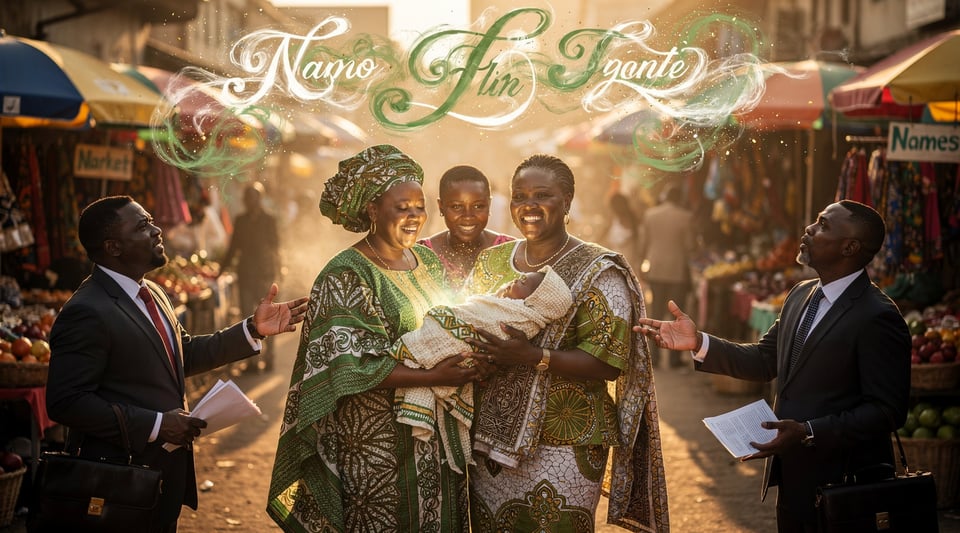
Rich naming traditions across ethnic groups
Nigeria has a rich and deeply meaningful naming culture, with hundreds of ethnic groups each carrying distinct naming traditions. Many Nigerian names are intentionally expressive: Yoruba 'circumstance names' reflect the conditions of a child's birth, Ijaw names can express parental emotion or fortune, and names across Muslim communities in the north frequently carry Quranic significance. Children can legally carry as many as ten or eleven names spanning multiple naming traditions.
What Nigeria's actual naming law covers
Nigeria's actual naming law — the Births, Deaths, Etc. (Compulsory Registration) Act of 1992 — focuses entirely on logistics: births must be registered within sixty days, parents or guardians bear the responsibility, and name changes can be filed with the National Population Commission within twelve months. The Child Rights Act of 2003 reinforces that receiving a name is a child's right, not a privilege subject to government content approval.
Seditious libel laws do not apply
Nigeria does have laws that could theoretically chill speech about the government — Criminal Code provisions on seditious libel target published defamatory matter about officials — but these apply to printed and broadcast communications, not to a parent's naming decision at a birth-registration desk.
Where the myth likely originated
The myth may have arisen from genuine laws in neighbouring or similarly profiled countries — Morocco restricts naming to approved lists, and Iran bans names insulting the Islamic government — and from the existence of Nigeria's broad seditious speech framework, which observers may have incorrectly extrapolated to naming. Global databases and legal commentaries on naming laws around the world consistently omit Nigeria from any list of countries with naming-content restrictions.
Where the story gets it wrong
People often conflate Nigeria's Criminal Code provisions on seditious libel, which criminalise defamatory publications targeting government officials, with a supposed law banning insulting baby names. No such naming law exists — Nigeria's registration statutes address only registration logistics, not name content.
Others may have confused Nigeria with countries that genuinely restrict naming on political grounds, such as Iran or certain Central Asian states. Nigeria's own naming law imposes no such content-based restrictions on parents.
Some 'weird law' listicle sites have recycled the claim without citing any primary legal source, helping it spread further despite the absence of any actual statute supporting it.
No provision in any Nigerian federal legislation — including the Births, Deaths, Etc. (Compulsory Registration) Act (1992), the Child Rights Act (2003), or the Criminal Code Act — prohibits or criminalises the giving of a name to a child on the grounds that it is insulting to the government or the state. Nigeria's primary birth-registration law governs when and how births must be registered, and the Child Rights Act guarantees every child the right to a name, but neither imposes content restrictions on the names parents may choose.
- Current status
- Unknown
- Penalty
- No penalty applicable — law does not exist.
- Jurisdiction
- Claim pertains to national-level Nigerian law. No state-level naming restrictions of this kind were located either.