“Australia Does NOT Ban Rainwater Collection — It Actually Mandates It in Some States”
The claim that collecting or storing rainwater is illegal in Australia is completely false. In reality, rainwater harvesting is legal across all Australian states and territories, actively encouraged by federal and state governments, and even mandatory for new homes in South Australia.
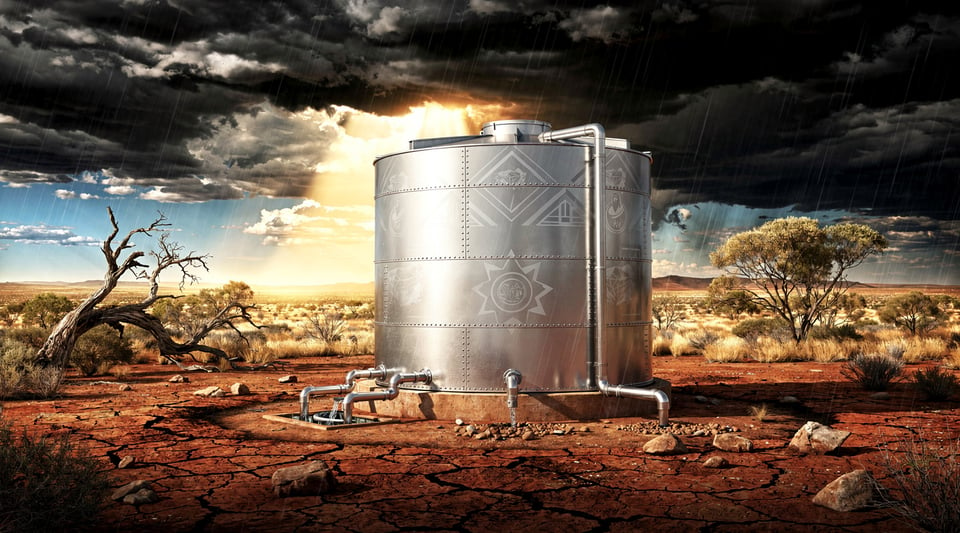
Rainwater tanks as an Australian necessity
Australia is often described as the driest inhabited continent on Earth, with 70% of its landmass classified as arid or semi-arid. Far from banning rainwater collection, Australian governments at every level have long promoted it as essential for water security. Rural Australians have relied on rainwater tanks for drinking, cooking, and sanitation for generations — for many, it was simply the only water supply available.
Mandatory tanks and government support
The regulatory picture is the polar opposite of the myth: South Australia made rainwater tanks mandatory for all new homes from 1 July 2006 under state amendments to the Building Code of Australia. Other states including Victoria, NSW, and Queensland have also adopted mandatory rainwater tank policies for new residential developments. The federal government has also run rebate schemes to help families purchase rainwater systems.
Confusion with US water rights law
So where does the myth come from? Almost certainly, it is a garbled cross-contamination with genuine rainwater restrictions in some western U.S. states, particularly Colorado, where a 120-year-old 'prior appropriation' water rights doctrine historically restricted residential rainwater collection on the theory that captured rain deprives downstream rights holders. This distinctly American legal concept has no equivalent in Australian water law. 'Weird laws' listicle websites and viral social media posts frequently strip legal claims of their national context and misattribute them — and Australia, with its reputation for unusual fauna and outback eccentricities, is a common target for such mislabelled trivia.
Where the story gets it wrong
Many believe Australia bans rainwater harvesting entirely. In reality, rainwater collection is legal in all eight states and territories, encouraged by the federal government, and even compulsory in new South Australian homes.
Some conflate Australian law with the U.S. 'prior appropriation' doctrine, a uniquely American legal tradition with no equivalent in Australia. Minor local restrictions — such as tank size approvals, plumbing standards, or mosquito-screening requirements — are sometimes exaggerated into a total ban.
No such law exists. To the contrary, Australia's National Construction Code (Part B7) sets out standards and requirements for rainwater storage systems. South Australia's Building Code of Australia Appendix (in force from 1 July 2006) mandates that all new Class 1 residential buildings install a plumbed rainwater tank of at least 1,000 litres. Guidelines on rainwater harvesting and installation are in place in most Australian states and territories, with the federal government having previously offered rebates under the Water for Future Initiative to encourage household adoption.
- Current status
- Never Enforced
- Penalty
- No such law or penalty exists. The myth involves no real statute.
- Jurisdiction
- Claim falsely asserted as a national law. In reality, rainwater collection is legal across all states and territories. Regulations vary by state (most permissive: QLD and WA; most prescriptive: SA, which mandates tanks for new builds). No Australian jurisdiction bans personal rainwater collection.