“Failing to flush a public toilet is illegal in Singapore”
Under Singapore's Environmental Public Health (Public Cleansing) Regulations, regulation 16, anyone using a public sanitary convenience must flush it after use. It's a genuine, fineable offence — but the S$1,000/S$5,000 figures often quoted for it actually come from a separate SFA penalty scale aimed at toilet operators, not individual users, so the exact fine for not flushing needs to be confirmed against the statute.
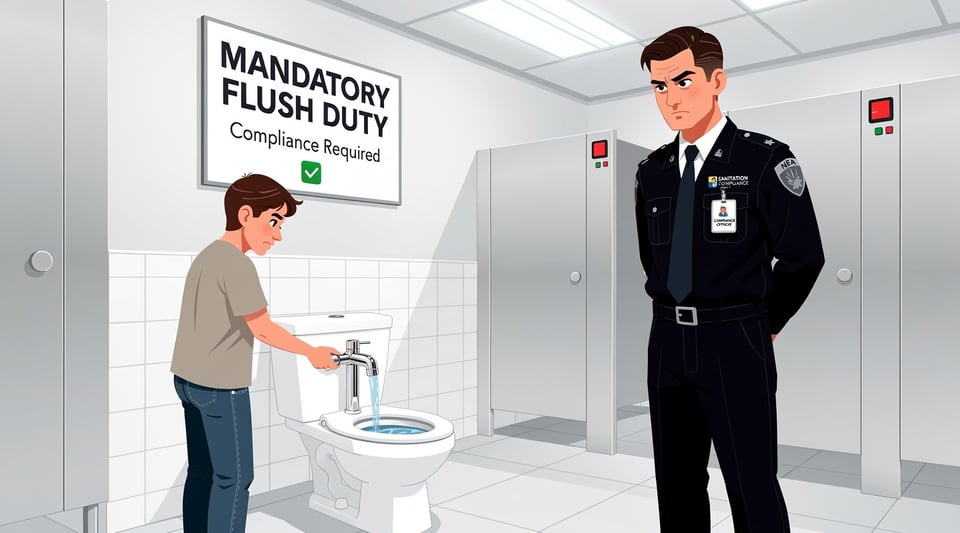
Singapore is globally renowned for its strict legal code regarding public order and cleanliness. Often called a "fine city" (a pun on its many monetary penalties), Singapore's statutes are actively enforced. The law imposes a positive duty on citizens to maintain the cleanliness of facilities for the next user. Enforcement is carried out by the National Environment Agency (NEA). While the myth suggests "toilet police" constantly monitoring stalls, enforcement is typically targeted; however, enforcement "blitzes" do occur. Data from the Singapore Food Agency indicates that between January 1, 2024, and November 15, 2024, approximately 900 enforcement actions were taken against coffee shop owners for toilet-related lapses. The law targets both the user (for flushing) and the operator (for maintenance and providing supplies), creating a dual-liability system.
Where the story gets it wrong
Some believe this law is merely an urban legend or an exaggeration of Singapore's reputation for strict rules. In fact, the flush requirement is a real regulation under the Environmental Public Health (Public Cleansing) Regulations, regulation 16, and offenders can be fined.
Others assume the rule applies only in upscale areas or that tourists are exempt from it. The regulation applies broadly to any person using a public sanitary convenience, regardless of location or visitor status.
Some think the penalty involves imprisonment or that bathroom monitors enforce compliance. The actual penalty is a monetary fine, and enforcement is carried out by the National Environment Agency through occasional targeted checks, not dedicated toilet monitors.
Any person who fails to flush a water closet after use thereof shall be guilty of an offence and shall be liable on conviction to a fine not exceeding one thousand dollars.
- Current status
- Actively Enforced
- Enacted
- March 25, 1992
- Penalty
- Breaching regulation 16 is a fine-only offence — no jail time, no toilet police. The exact amount is being reconfirmed against the statute: the S$1,000 (first offence) to S$5,000 (repeat) figures commonly cited actually belong to a separate SFA penalty scale for toilet operators (dirty premises, missing soap or paper), not to individual users who forget to flush.Fine: up to SGD5,000