“You Can't Buy a Car on Sunday in These 12+ US States — It's Actually Illegal”
In approximately 14 U.S. states, selling or buying a car at a dealership on a Sunday is explicitly prohibited by law. These restrictions are remnants of colonial-era 'Blue Laws' and remain actively enforced today.
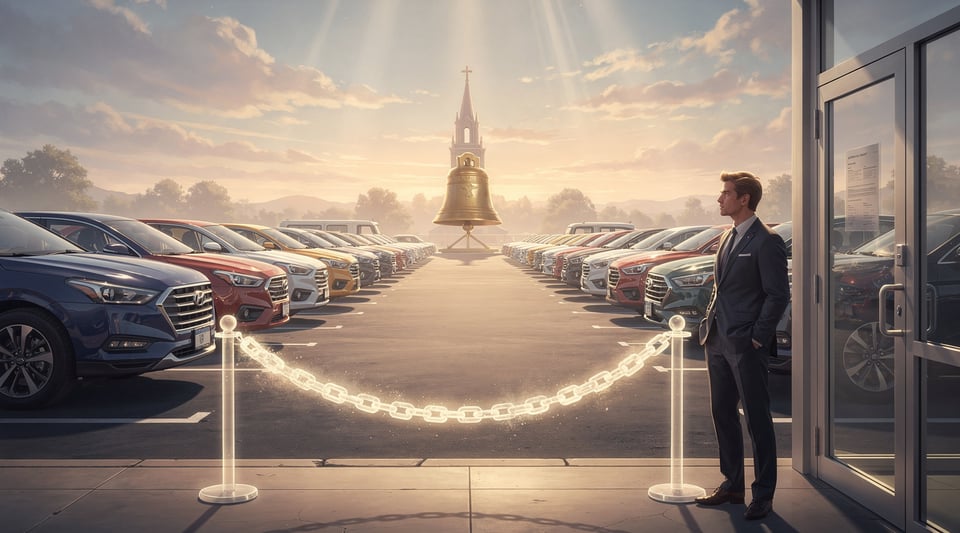
Origins in Colonial-Era Blue Laws
America's Sunday car-sales bans are survivors of a much broader legal tradition known as 'Blue Laws' — statutes rooted in colonial-era religious values that sought to keep Sunday as a sacred day of rest and worship. At their peak, Blue Laws regulated vast swaths of daily life, from prohibiting work to restricting the sale of specific goods. Over the 20th century, most of these laws were gradually repealed as society became more secular, but the automotive sales ban proved remarkably sticky.
Why the Bans Persist Today
The reasons are partly surprising: it's not just religious sentiment keeping these laws alive. Car dealers themselves frequently lobby to preserve them. A guaranteed Sunday closure levels the playing field — no dealer can poach customers by staying open an extra day — and gives employees a consistent day off without any single dealership falling behind the competition. Banks are also closed on Sundays, meaning auto loans can't be processed in real time, which further complicates Sunday sales.
FTC Criticism and Stalled Repeals
The Federal Trade Commission has publicly criticized these bans, noting that Illinois' prohibition harms competition and makes it harder for consumers to shop around for the best deal. Illinois' ban has been in effect since 1983–1984. Pennsylvania's Board Vehicle Act of 1983 similarly codified the ban there. Repeal efforts have repeatedly stalled — an Illinois Senate committee defeated one such bill as far back as 1987, and New Jersey's legislature has similarly rebuffed multiple challenges.
State by State Variations and Compromises
Some states take creative middle-ground approaches: Texas and Utah require dealerships to close on either Saturday or Sunday, but not both, giving businesses flexibility while maintaining a mandatory weekly day of rest. Maryland allows the ban to be determined county by county. Michigan restricts Sunday sales only in counties with populations above 130,000 — a threshold set in 1953. North Dakota is sometimes lumped in with these partial restrictions, but its statute is actually a flat, all-day ban on dealer sales — and it survived the state's 2019 repeal of most of its other blue laws intact.
Where the story gets it wrong
Many assume Sunday car-sales bans are a nationwide federal law, but the restriction varies entirely by state — roughly half of U.S. states, including California, New York, and Florida, have no such ban. Enactment dates also vary widely rather than being uniform relics: Illinois, for example, didn't pass its ban until 1983.
The bans are often assumed to be purely religious in origin. In reality, dealer lobbying and competitive-fairness arguments — such as guaranteeing a shared day off — now drive their preservation more than any lingering religious sentiment.
Texas and Utah are sometimes described as having outright Sunday sales bans. In fact, both states only require dealerships to close on one weekend day — either Saturday or Sunday — leaving the choice up to the dealer rather than mandating a fixed day.
Under New Jersey Revised Statutes § 2C:33-26, 'a person who engages in the business of buying, selling, or exchanging motor vehicles or who opens a place of business and attempts to engage in such conduct on a Sunday commits a disorderly persons offense.' Similar statutes exist in Colorado, Illinois, Indiana, Iowa, Louisiana, Maine, Minnesota, Missouri, Mississippi, Pennsylvania, and Wisconsin. North Dakota's law, N.D.C.C. § 39-22-07.1 ('Motor vehicle sales prohibited on Sunday - Penalty'), reads in full: 'A motor vehicle dealer may not sell a motor vehicle on Sunday. A violation of this section is a class B misdemeanor.' Oklahoma, under Okla. Stat. tit. 21, § 918, bars any person from keeping open or operating any place 'for the purpose of selling, bartering, or exchanging, or offering for sale, barter, or exchange, any motor vehicle or motor vehicles, whether new, used, or secondhand, on the first day of the week, commonly called Sunday.'
- Current status
- Actively Enforced
- Penalty
- New Jersey (representative example), N.J.S.A. 2C:33-26: first offense — a fine not to exceed $100 or imprisonment for not more than 10 days, or both; second offense — a fine not to exceed $500 or imprisonment for not more than 30 days, or both; third or subsequent offense — a fine of $750 or imprisonment for six months, or both. Licensed dealers also risk suspension or revocation of their dealer's license. North Dakota, N.D.C.C. § 39-22-07.1: a violation is a class B misdemeanor, carrying a maximum of 30 days' imprisonment, a fine of $1,500, or both (N.D.C.C. § 12.1-32-01(6)). Illinois' Sunday-closing provision, 625 ILCS 5/5-106, sets out the prohibition but fixes no fine of its own.Fine: from USD100
- Jurisdiction
- Applies in approximately 14 states with full bans (Colorado, Illinois, Indiana, Iowa, Louisiana, Maine, Minnesota, Missouri, Mississippi, New Jersey, North Dakota, Oklahoma, Pennsylvania, Wisconsin) and additional states with partial restrictions (Texas, Utah, Maryland, Michigan, Nevada, Rhode Island). Does not apply in California, New York, Florida, and many others.