“Turkmenistan Bans Dark Clothing & Forces Women Into Bright Traditional Dress”
Turkmenistan enforces strict, state-mandated dress codes requiring women to wear bright traditional Turkmen attire and banning dark (especially black) clothing — but these rules operate through informal presidential directives rather than formal legislation, and carry very real consequences including job loss and fines.
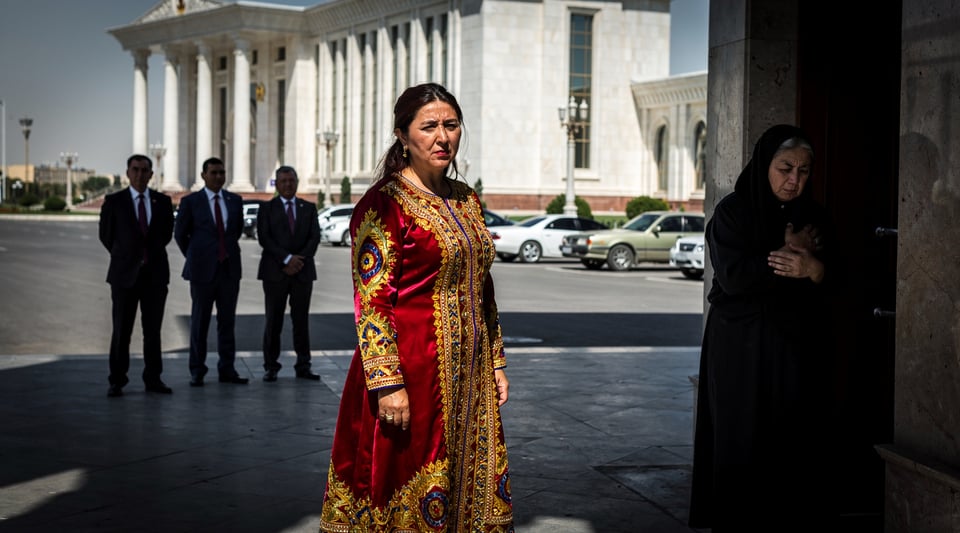
Origins Under Niyazov And Early Aesthetic Control
Turkmenistan's obsession with controlling how citizens look traces back to its first post-Soviet president, Saparmurat Niyazov (ruled 1991–2006), who banned everything from gold teeth to opera and renamed the months of the year after himself. His successor, Gurbanguly Berdymukhammedov (2006–2022), intensified aesthetic controls, mandating white or pale cars throughout Ashgabat, removing air-conditioning units from building facades, and systematically requiring women to wear traditional Turkmen dress. The capital, already nicknamed the 'White City' for its Guinness-record density of white marble buildings, became a living canvas for presidential taste.
Restrictions Tighten Under Serdar Berdymukhammedov
Under current president Serdar Berdymukhammedov (Gurbanguly's son, in power since March 2022), the dress restrictions tightened further — beauty salons were shuttered, women were banned from sitting in the front seat of taxis, and specific color mandates (particularly yellow) were issued for female state employees.
No Legal Basis, Real Enforcement
Academic expert Slavomir Horak of Charles University has told RFE/RL that these 'regulations are not based on legal documents' — they flow from presidential remarks, internal memos, and unofficial instructions passed down through employers and police. This means citizens cannot challenge them in court or even demand to see the written rule. The system enforces compliance through the threat of job loss, fines of up to half a month's salary, or police detention.
Where the story gets it wrong
The claim frames this as a single codified law banning dark clothing. In fact, there is no formal statute — the restrictions are informal presidential directives and administrative orders that are nonetheless aggressively enforced through job loss, fines, and other penalties.
The claim implies these rules apply to all citizens equally. In fact, the dress restrictions target women — particularly state employees and students — while men face separate restrictions (no beards, no Western styles, no skinny trousers) that do not include color mandates.
The claim describes a generic ban on 'dark clothing' paired with mandatory 'bright' dress. The most recent mandate specifically requires yellow attire for female state employees, not merely any bright color, and Ashgabat's famous 'white city' aesthetic applies to buildings and cars, not clothing.
No single codified statute exists. Women working in state institutions are required to wear embroidered national dresses (köynek); black or dark clothing is de facto banned for women, linked to state suppression of Islamic dress. As of March 2025, unmarried female state employees in Ashgabat must wear yellow headscarves and married women must wear yellow dresses to work. Additional rules ban tight-fitting clothes, dyed hair, Western-style garments, and cosmetic procedures. University students must wear nationally prescribed dresses in the specific color and fabric designated by their institution. Those who fail to comply face dismissal or fines.
- Current status
- Actively Enforced
- Enacted
- January 1, 2018
- Penalty
- Dismissal from employment for state workers who violate dress codes; fines of up to 1,000 Turkmen manat (~$285 at official rate, ~$30 at black-market rate) for related violations (e.g., beauty service bans); police detention of up to 15 days reported for salon owners; informal social sanctions including public reprimand at workplace or university.Fine: up to TMT1,000Imprisonment: 15 days
- Jurisdiction
- Applies nationally; enforcement is heaviest in Ashgabat and in state institutions (government offices, schools, universities) across the country.