“Kentucky bans dyeing baby chicks, ducklings, and rabbits for sale”
TRUE! It is illegal to dye or color living baby fowl, rabbits, or chicks, or to sell them in lots of fewer than six.
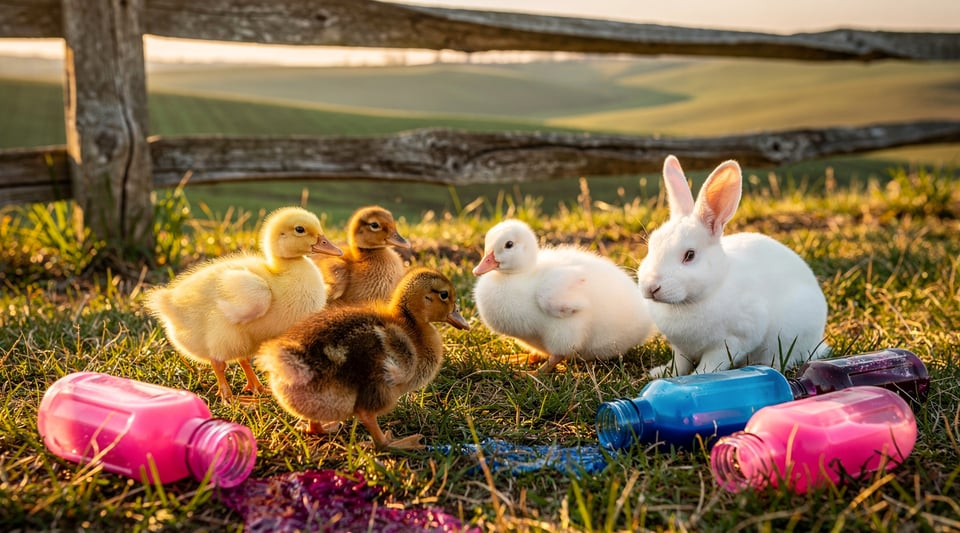
Every Easter, people were dyeing chicks pink, blue, and purple to sell as cute holiday gifts. Kids would beg for them, parents would buy them, and within weeks the novelty wore off. The now-grown chickens were abandoned or died from improper care. Kentucky enacted this law in 1942. It requires buyers to purchase at least six animals rather than just one. Similar laws exist in other states.
Where the story gets it wrong
Some assume this is a quirky Kentucky-only law, but many U.S. states have similar statutes banning the dyeing of chicks and rabbits. Kentucky's statute also sets a minimum sale quantity of six or more animals, discouraging the treatment of live animals as impulse novelty gifts.
KRS 436.600 — Dyeing or selling dyed baby fowl or rabbits: "No person shall sell, exchange, offer to sell or exchange, display, or possess living baby chicks, ducklings, or other fowl or rabbits which have been dyed or colored; nor dye or color any baby chicks, ducklings, or other fowl or rabbits; nor sell, exchange, offer to sell or exchange or to give away baby chicks, ducklings, or other fowl or rabbits, under two (2) months of age in any quantity less than six (6), except that any rabbit weighing three (3) pounds or more may be sold at an age of six (6) weeks."
- Current status
- Actively Enforced
- Enacted
- January 1, 1966
- Penalty
- $50-$100 fine