“Alberta bans painting wooden ladders to prevent hiding defects”
Alberta's Occupational Health and Safety Code prohibits painting wooden ladders, though transparent coatings are allowed. British Columbia has a similar regulation requiring any coating to be transparent.
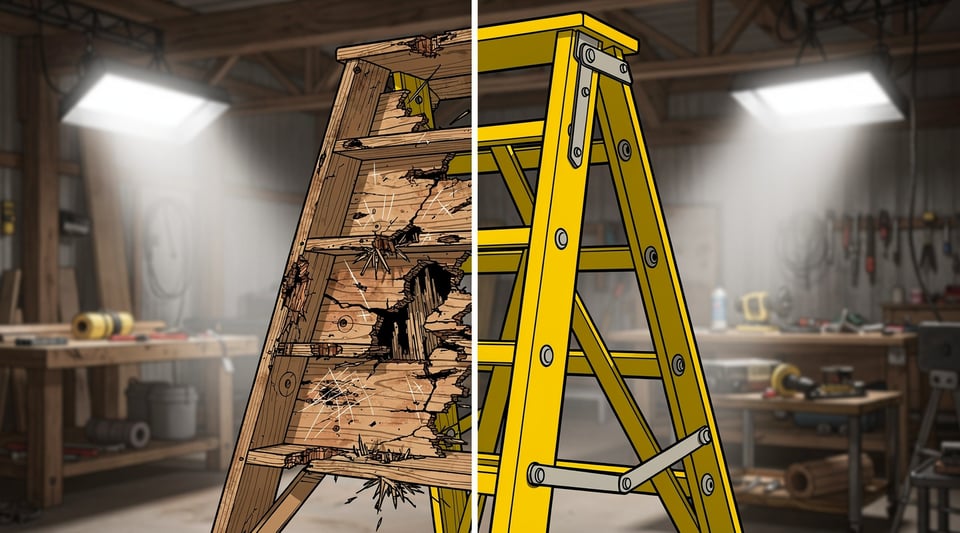
How paint hides ladder damage
Wooden ladders are subject to natural deterioration including rot, cracking, and splitting that can compromise their structural integrity. Visual inspection is critical to identifying these defects before they cause accidents. Paint, particularly opaque paint, can mask cracks, splits, rot, and other damage that would otherwise be visible on bare wood, making it harder to tell whether an old, deteriorating ladder is still safe to use.
Multi-province ladder safety standards
The regulation exists in Alberta's 2009 Occupational Health and Safety Code and is part of comprehensive ladder safety standards adopted across multiple Canadian provinces. Similar provisions exist in British Columbia and New Brunswick, and are recommended in Canadian occupational health and safety guidelines nationwide. The law doesn't ban all finishes—transparent protective coatings are explicitly permitted because they preserve the wood while still allowing defects to be seen during routine inspections.
Alberta versus British Columbia rules
While the claim specifically mentioned British Columbia, the outright prohibition on painting exists in Alberta, though BC has functionally similar requirements that coatings must be transparent.
Where the story gets it wrong
The claim states this law applies to British Columbia specifically, but the explicit prohibition on painting wooden ladders is actually in Alberta's regulations. British Columbia's regulation is worded differently—it requires that any protective coating be transparent rather than outright banning paint, though the practical effect is similar.
The law is often cited on 'weird laws' lists without noting that it only applies to workplace settings, not homeowners' personal ladders, and that transparent coatings are allowed.
Alberta's Occupational Health and Safety Code, Section 126(1) states: 'Subject to subsection (2), a person must not paint a wooden ladder.' Section 126(2) allows: 'A wooden ladder may be preserved with a transparent protective coating.' British Columbia's Regulation 296/97, Section 13.3 similarly states: 'A protective coating applied to a wooden ladder, other than a small amount for identification purposes, must be transparent to allow any defects to be discovered by inspection.'
- Current status
- Actively Enforced
- Enacted
- January 1, 2009
- Penalty
- Violations fall under provincial occupational health and safety penalties, which vary by severity and can include fines for employers and workers
- Jurisdiction
- Provincial regulation in Alberta (explicit prohibition) and British Columbia (transparent coating requirement). Similar provisions exist in New Brunswick and other provinces.