“Bolivia Does NOT Require Citizens to Perform Minka Community Labor”
The claim that Bolivia has a national law forcing all citizens to participate in minka (communal labor projects) under threat of criminal penalties is false. No such statute exists at the national level.
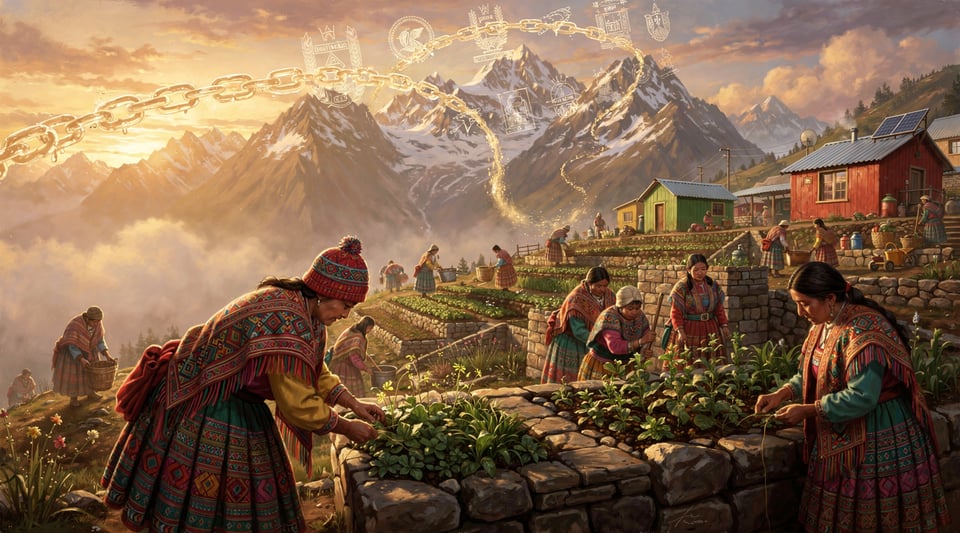
Origins of Andean communal labor traditions
Minka (also spelled mink'a or minga) is a pre-Columbian Andean tradition of communal labor cooperation found across Bolivia, Peru, and Ecuador. Along with ayni (reciprocal exchange) and the colonial-era mita (rotational state labor), it forms part of a rich indigenous system of collective work that helped build Inca infrastructure, irrigate farmlands, and maintain community cohesion.
Constitutional embrace of indigenous values
Under Bolivia's President Evo Morales (2006–2019), the government embraced indigenous communitarian values at a constitutional level, officially naming Bolivia a 'Plurinational Communitarian State' and incorporating Andean ethical principles like suma qamaña ('living well') into the 2009 Constitution. This political romanticization of indigenous traditions — combined with the constitution's explicit recognition of indigenous economic practices — appears to have spawned the myth that minka participation was legally mandated for all citizens.
Legal reality bans forced labor
In reality, Bolivia's 2009 Constitution (Article 46) explicitly bans forced labor. Academic research confirms minka is a voluntary cultural practice, and that market forces have actually made it less common in urban Bolivia.
Community labor only as penalty alternative
Where Bolivian law does reference community labor, it is as a sanction alternative under specific administrative laws — not as a universal duty. The confusion between cultural celebration of communal traditions and their legal enforcement has given this myth legs on 'weird laws' websites worldwide.
Where the story gets it wrong
People conflate three distinct things: pre-Columbian minka as a voluntary cultural tradition, Bolivia's constitutional recognition of indigenous communitarian values, and 'trabajo comunitario' as an optional sentencing alternative under laws like Ley 259. None of these amount to a national law requiring all citizens to perform minka under threat of criminal prosecution.
The historic Inca mita system, which did involve obligatory rotating labor, is sometimes confused with minka. Mita ended after Spanish colonization and was never revived as a national law in modern Bolivia.
No Bolivian national statute mandating universal citizen participation in minka exists. Bolivia's 2009 Constitution (Article 46) explicitly prohibits all forms of forced labor. Community labor ('trabajo comunitario') does appear in Bolivian law, but only as an optional penalty alternative for minor public order infractions (e.g., public intoxication under Ley 259), not as a universal civic obligation.
- Current status
- Unknown
- Penalty
- No penalty exists — law does not exist. The claimed criminal offense for non-participation has no basis in Bolivian legislation.
- Jurisdiction
- Claim is made at the national level. No such national law exists. Bolivia's Constitution explicitly prohibits forced labor.