“Canada banned margarine for 70 years, then provinces banned yellow margarine”
REPEALED! Canada banned margarine from 1886 to 1948, apart from a wartime lapse from 1917 to 1923. After the Supreme Court struck down the federal ban, provinces prohibited yellow-coloured margarine to protect dairy farmers. Quebec was the last holdout until 2008.
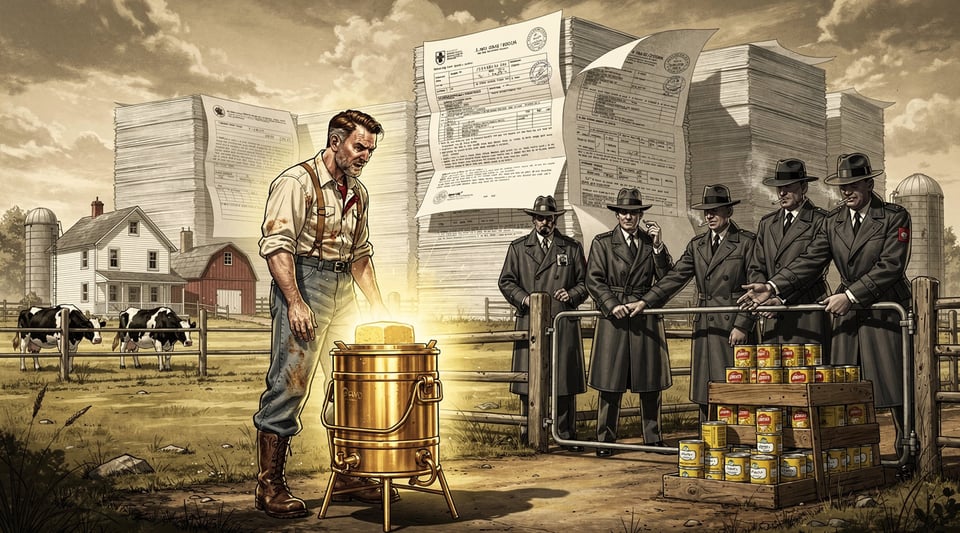
The Federal Ban And Bootleg Margarine
Canada's margarine ban was one of the longest-running food prohibitions in Western history—a six-decade testament to the political power of the dairy lobby. Parliament enacted "An Act to prohibit the Manufacture and Sale of certain substitutes for Butter" in 1886, whose preamble declared butter substitutes "injurious to health"—but the real motivation was protectionism: dairy farmers feared competition from this cheaper alternative. The prohibition lapsed only once, when wartime dairy shortages forced Ottawa to suspend it under the War Measures Act in 1917; margarine stayed legal until 1923. The ban created some unexpected consequences—Newfoundland, which didn't join Canada until 1949, had no such prohibition, and became a source of "bootleg margarine" smuggled into mainland Canada. When Newfoundland finally joined Confederation, the Newfoundland Butter Company pivoted to become Canada's first legal margarine manufacturer.
The Supreme Court Strikes It Down
On December 14, 1948, the Supreme Court answered the Margarine Reference, ruling that section 5(a) of the Dairy Industry Act's ban on manufacturing and selling margarine exceeded federal jurisdiction—only the ban on importing it survived. The Privy Council upheld the decision in 1950, leaving margarine regulation to the provinces.
Provinces Impose Their Own Color Restrictions
After the federal ban fell, provinces implemented their own restrictions. Several provinces, including BC and Alberta, banned yellow-colored margarine to ensure it couldn't be mistaken for butter. Margarine had to be sold white, or in some provinces, an unappetizing orange or pink color. Manufacturers sometimes included a packet of yellow dye so consumers could color their own margarine at home.
Timeline Of Provincial Repeal
Ontario required margarine to be sold uncolored, a rule it repealed with its Oleomargarine Act in 1995. Quebec prohibited yellow margarine until 2008, making it the last province to repeal such restrictions.
Where the story gets it wrong
The ban was not simply about health concerns—it was primarily driven by the powerful dairy lobby to eliminate competition from cheaper margarine. The federal ban lasted from 1886 to 1948, with a brief wartime exception from 1917 to 1923, not a continuous 70 years. Provincial colour restrictions persisted much longer.
- Current status
- Repealed
- Enacted
- January 1, 1886
- Repealed
- July 1, 2008
- Penalty
- Under the Dairy Industry Act, Section 10: a fine of not less than $200 and not more than $400 for each conviction, plus costs of prosecution, and in default of payment, imprisonment with or without hard labour for up to six months.