“France Didn't Quite Ban Ketchup — But It Did Restrict It in Schools”
France passed a real 2011 regulation restricting how ketchup is served in school cafeterias — but it was never a full 'ban.' The rule prevents ketchup from being freely available at self-serve stations; it may only be served alongside dishes where it is appropriate (essentially, with fries).
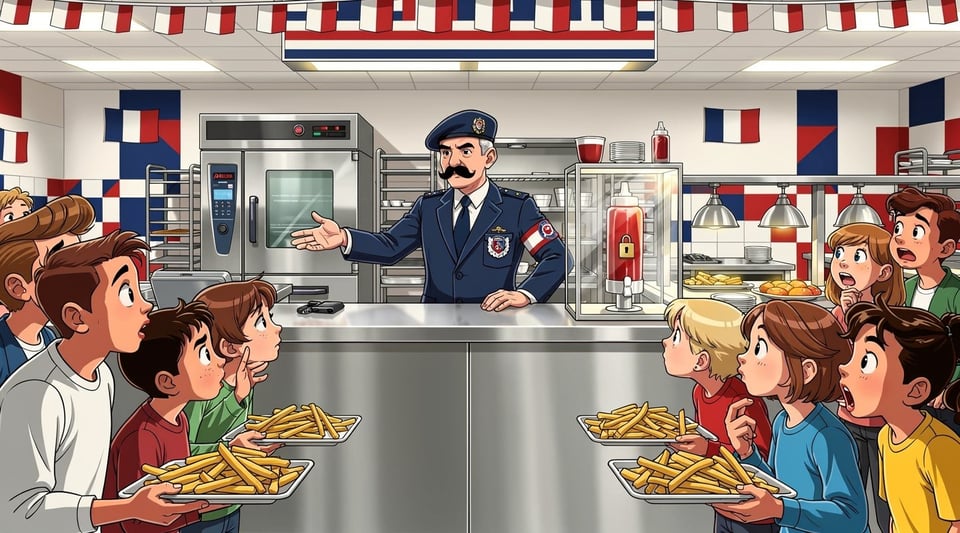
The 2011 school cafeteria regulation
In October 2011, the French government published Décret n° 2011-1227 and its accompanying Arrêté, aimed at improving the nutritional quality of meals served in school cafeterias across France. The sweeping reform covered meal composition, portion sizes, frequency of fatty or starchy dishes, and — crucially — the service of salt and condiments including ketchup. Article 2 of the Arrêté specified that sauces like ketchup, mayonnaise, and vinaigrette could no longer sit in open pump dispensers on cafeteria tables; instead, school staff would serve them dish-by-dish as appropriate.
Media framing sparks a global narrative
Anglo-American media, led by the Los Angeles Times and Gawker, ran with the story framing it as France 'banning ketchup to protect its cuisine,' and the narrative exploded globally. Agriculture Minister Bruno Le Maire's quote — that 'France must be an example to the world in the quality of its food' — added fuel to the fire, suggesting cultural protectionism. However, a French education official later clarified that ketchup was 'not and was never banned in France' and that the regulation's true goal was simply to stop children from drowning nutritious meals in fatty sauces.
The fries exception explained
The irony at the heart of the story — that ketchup remained allowed with French fries (pommes frites), served once a week — was widely noted. Critics pointed out that permitting ketchup with fries while banning it from boeuf bourguignon seemed more about gastronomy than nutrition. In reality, the two rules together were intended as a nutritional package: limit fries to once a week, and when you do serve them, ketchup is fine. The cultural dimension was real but secondary. The regulation remains in force.
Where the story gets it wrong
The most widespread misconception is that France 'banned' ketchup in schools entirely. In fact, the regulation never prohibited ketchup — it prohibited self-serve, free-access condiment dispensers for ketchup and other sauces, requiring staff to serve them dish-by-dish instead.
A second misconception is that the sole motivation was protecting French culinary heritage. The primary stated rationale was nutritional quality and preventing children from over-consuming fatty condiments; the cultural framing came largely from media interpretation, not the law's text.
Article 2 of the Arrêté du 30 septembre 2011 states: 'Le sel et les sauces (mayonnaise, vinaigrette, ketchup) ne sont pas en libre accès et sont servis en fonction des plats.' (Salt and sauces — mayonnaise, vinaigrette, ketchup — are not freely available and are served according to the dishes.) The parent Décret n° 2011-1227 also mandates that French fries may be served no more than once per week.
- Current status
- Actively Enforced
- Enacted
- October 2, 2011
- Penalty
- No specific fine for the ketchup provision is enumerated; compliance with the broader nutritional decree is monitored by inspectors under Article L. 230-5 of the Code rural et de la pêche maritime.
- Jurisdiction
- Applies nationally to all French school and college (collège/lycée) cafeterias serving more than 80 meals per day (smaller cafeterias had until September 2012 to comply).