“Indonesia Mandates Civil Servants Wear Official Batik Uniform — But Not Quite How You've Heard”
Indonesian civil servants are legally required to wear the official KORPRI batik uniform on designated days in government offices. However, the claim that wearing 'insufficiently respectful or poor quality' batik is illegal misrepresents the regulation — the law mandates wearing a specific prescribed batik, not banning low-quality batik.
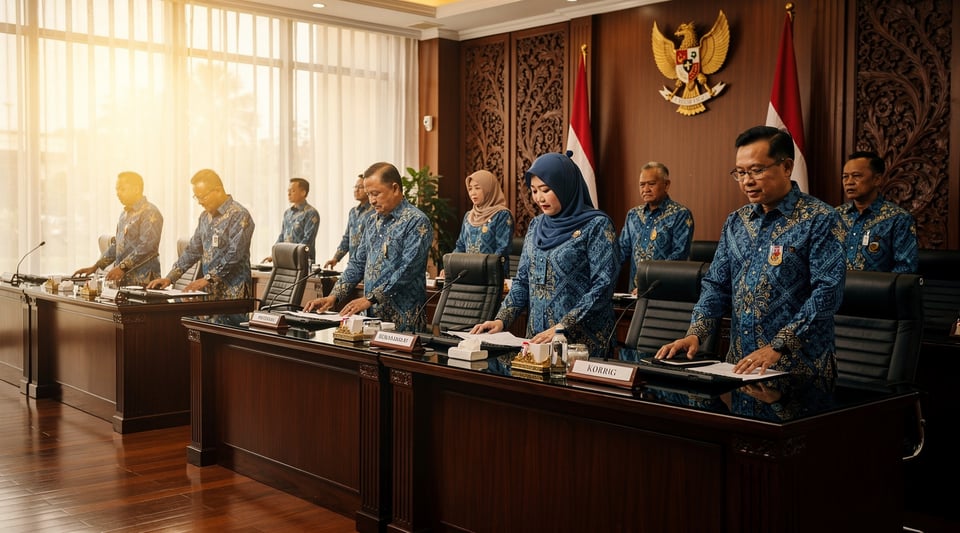
Batik heritage and the uniform mandate
Batik is far more than just fabric in Indonesia — it is a UNESCO-inscribed Intangible Cultural Heritage of Humanity (designated 2 October 2009) and a potent symbol of national identity. The Indonesian government has spent decades weaving batik into the fabric of its bureaucracy, quite literally. Civil servants belonging to KORPRI (Korps Pegawai Republik Indonesia), the mandatory civil servant corps established on 29 November 1971 by Presidential Decree (Keputusan Presiden) No. 82 of 1971, are required to wear a distinctive blue KORPRI batik uniform on designated workdays. Minister of Home Affairs Regulation No. 10 of 2024 sets the weekly batik schedule for civil servants, and the most recent reaffirmation came in January 2026 via BKN Circular No. 2/2026, which restates the schedule for central and regional agencies and calls on agency heads to ensure compliance.
How the claim misreads the rule
Where the claim goes astray is in its framing. The law does not prohibit the general public from wearing 'poor quality' batik in government buildings — it mandates that civil servants wear a specific, prescribed batik uniform. Unauthorised modifications to the uniform can attract administrative reprimands, but this is a uniform compliance issue, not a batik-quality law. Cultural norms do exist around batik appropriateness — for instance, certain court motifs like 'Huk' are considered disrespectful if worn in the wrong ceremonial context — but these are social customs, not criminal statutes.
Wider batik regulatory framework
The broader context also includes Indonesia's Batikmark certification scheme, which certifies authentic Indonesian batik products, and import restrictions on batik-patterned goods. A separate strand of policy commemorates rather than regulates: Presidential Decree No. 33 of 2009 designated 2 October as National Batik Day, the date UNESCO inscribed batik as Intangible Cultural Heritage. Together, these layers create a rich regulatory ecosystem around batik.
Where the story gets it wrong
The claim inverts the actual regulation: the real rule is a mandate to wear the official KORPRI batik uniform on designated days, not a ban on 'poor quality' batik. Non-compliance can bring administrative reprimands for civil servants only; cultural taboos around certain motifs are social conventions, not statutes.
- Current status
- Actively Enforced
- Enacted
- November 29, 1971
- Penalty
- Administrative sanctions (reprimand) for civil servants who fail to wear the prescribed KORPRI batik uniform on designated days. No criminal penalty. Institutions whose employees violate uniform rules may also be subject to institutional sanction.
- Jurisdiction
- Applies nationally to all Aparatur Sipil Negara (ASN) — civil servants and PPPK contract staff — across all central and regional government agencies in Indonesia and overseas representations. Private sector employees and members of the public are not covered.