“Spain Protected Kids From Violent TV — But Bullfighting Kept Getting a Pass”
Spain's audiovisual laws restrict violent content during children's viewing hours, yet bullfighting — legally shielded as 'intangible cultural heritage' — has repeatedly been exempted from child-protection measures, including being restored to prime-time state TV over child welfare objections.
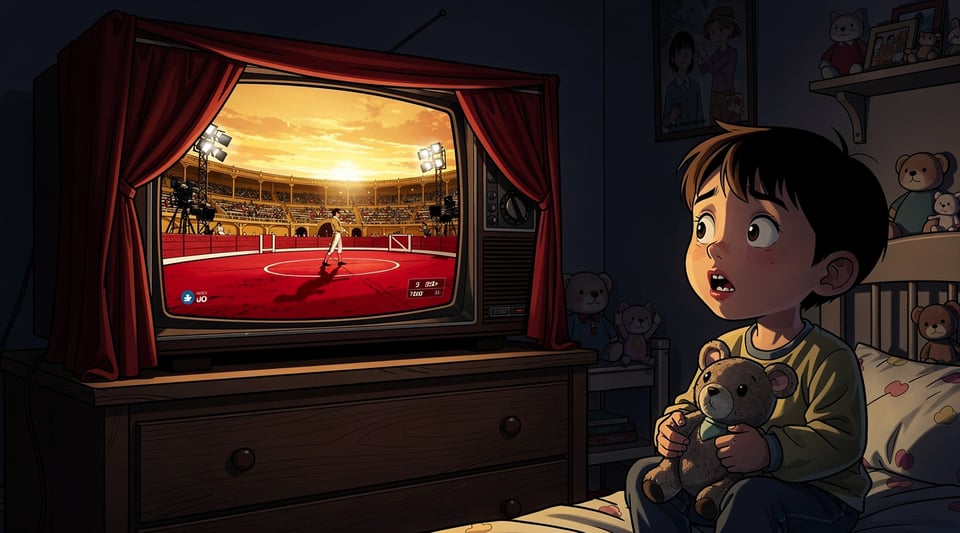
RTVE Pulls Bullfights From Television
In 2007, the Socialist government of José Luis Rodríguez Zapatero quietly pulled live bullfights from state broadcaster RTVE, arguing the broadcasts were too violent for children and conflicted with the broadcaster's voluntary code limiting 'sequences that are particularly crude or brutal.' RTVE made this ban official in its 2011 editorial stylebook, citing the hours at which bullfights typically aired — smack in the middle of children's viewing time.
Rajoy Reverses the Broadcast Ban
Then came the political whiplash. In September 2012, incoming Conservative Prime Minister Mariano Rajoy — a noted bullfighting fan — reversed the ban. Live bullfights returned to state TV during prime children's viewing hours. The Catalan Audiovisual Council openly questioned whether this breached Spain's child protection broadcast laws, but no legal action succeeded.
Cultural Heritage Status Shields Bullfighting
The deeper irony is structural. Spain's Law 18/2013 declared bullfighting 'intangible cultural heritage,' a designation later used by the Constitutional Court in 2016 to overturn Catalonia's outright ban. Spain's national animal cruelty laws also carry explicit carve-outs for bullfighting. Even the Penal Code exempts regulated corridas from animal cruelty charges — a protection maintained even after reforms that toughened penalties for other forms of animal cruelty.
Minors Still Legally Attend Bullfights
As of early 2026, Spain remains effectively the only country where bullfighting is still practiced that has no national law prohibiting children under 18 from attending. The UN Committee on the Rights of the Child first called on Spain in 2018 to bar minors from bullfights; Spain failed to act. A fresh legislative proposal was announced in January 2026 as part of LOPIVI reform — but it had not yet been enacted.
Where the story gets it wrong
It's often assumed a single law contains an explicit written exemption for bullfighting from children's TV watershed rules. No such clause exists. The exemption works indirectly: bullfighting's 'intangible cultural heritage' status (Law 18/2013) and carve-outs in animal cruelty laws create the legal shield, while the 2007–2012 RTVE ban was a broadcaster policy decision, not a statutory mandate.
The claim is sometimes read as covering children attending bullfights in person, but that is a separate issue from TV content restrictions. Watching a bullfight broadcast during children's viewing hours and physically attending a live bullfight are distinct issues; the latter remains entirely legal in Spain as of 2026.
Spain's General Audiovisual Communication Law (Ley 7/2010, updated by Ley 13/2022) prohibits broadcasting content harmful to minors during protected viewing hours (6am–10pm weekdays; broader restrictions on weekends and public holidays). Content recommended for audiences over 13 must be broadcast outside these periods. Separately, Spain's Penal Code and national animal cruelty laws explicitly exempt regulated bullfighting from animal cruelty provisions. Law 18/2013 designates bullfighting as part of Spain's 'intangible cultural heritage,' creating a legal shield that has been used to override regional bans and resist child-protection reforms. No dedicated clause in the audiovisual law text grants bullfighting an explicit TV watershed exemption by name — but bullfighting's cultural heritage status has functioned as a de facto exemption in practice.
- Current status
- Actively Enforced
- Enacted
- January 1, 2010
- Penalty
- Violations of child-protection broadcasting rules can result in administrative fines under the audiovisual authority. Unregulated bullfighting events can result in substantial financial fines and potential criminal charges.
- Jurisdiction
- Applies at national level across Spain, with some autonomous community variations. The Canary Islands banned bullfighting in 1991; Catalonia's 2010 ban was overturned by the Constitutional Court in 2016.