“Building sandcastles can get you fined in Spain and Italy”
TRUE! Various Spanish and Italian beach towns have banned or restricted sandcastle building, with fines ranging from €150 to €1,500.
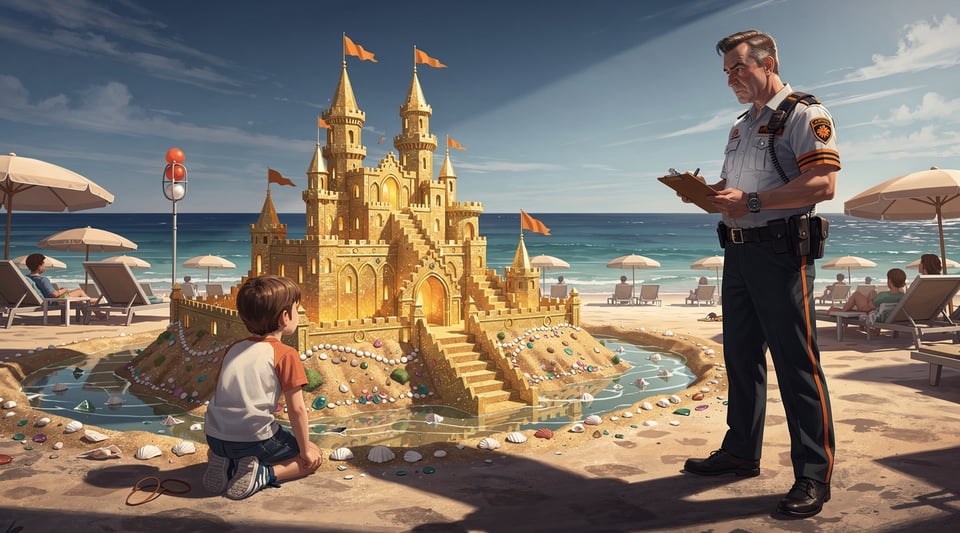
Several beach towns in Spain and Italy have banned or restricted sandcastle building. In Eraclea, Italy (near Venice), building a sandcastle can bring a €500 fine. Benidorm, Spain's Levante beach carries a €150 fine, while Galicia, Spain allows fines of up to €1,500 under the Ley de Costas. In Arona and Arica, Tenerife, a permit is required. Stated reasons for these restrictions include obstructing beach passage, blocking views for other tourists, interfering with rescue and medical teams, and — in Galicia's case — protecting sand dunes. Enforcement varies widely: professional sand sculptors soliciting money are more likely to be targeted than children building small castles.
Where the story gets it wrong
Some assume there's a single national law banning sandcastles, but these are municipal-level ordinances that vary by location and season. Enforcement typically targets large or elaborate structures that obstruct pathways or interfere with beach maintenance, not small children's sandcastles. Not all beaches in Spain or Italy have these restrictions.
Multiple municipal ordinances across Spain and Italy prohibit or restrict sandcastle building on public beaches. In Spain, Benidorm banned sand structures on Levante beach following a 2016 Town Hall vote, with fines up to €150. In Galicia, Spain, fines can reach €1,500. In Italy, the town of Eraclea near Venice banned sandcastle building on its beaches, citing obstruction of passage and beach maintenance concerns.
- Current status
- Rarely Enforced
- Enacted
- January 1, 2016
- Penalty
- €150-1,500 depending on location