“Sri Lanka Bans Instant Noodle Imports That Don't Meet Official Standards”
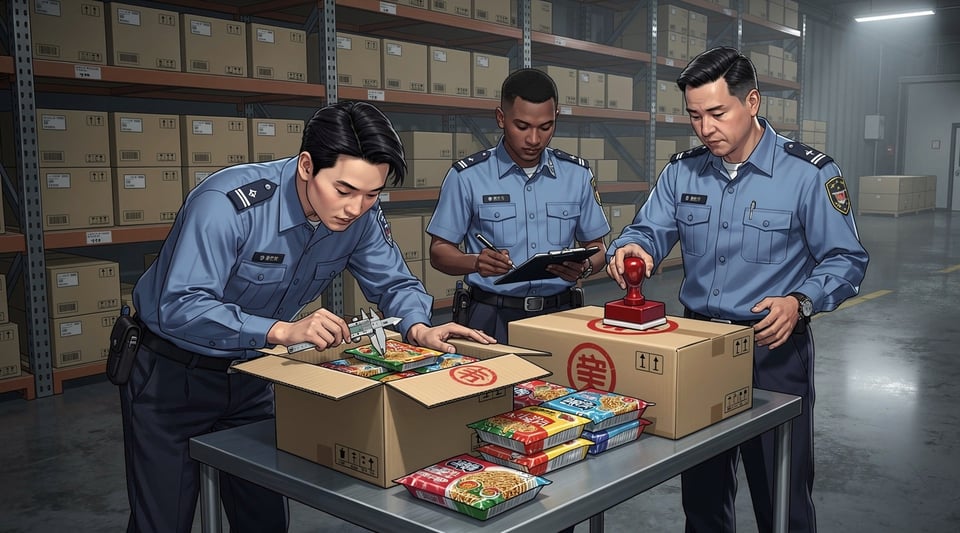
Sri Lanka requires all imported instant noodles to comply with Sri Lanka Standard SLS 1534, enforced through a mandatory import inspection scheme. Shipments failing to meet the standard can be rejected at the border — but the standard covers quality, composition, and safety broadly, not just 'nutritional standards' as the claim implies.
Background On Food Regulation
Sri Lanka has one of the more active food regulatory regimes in South Asia, rooted in the Food Act No. 26 of 1980 and reinforced by SLSI's mandatory import inspection scheme. Instant noodles have been a staple in Sri Lankan households for decades — brands like Maggi (Nestlé's Sri Lankan subsidiary proudly displays its SLS certification for its Maggi noodle range) compete vigorously in the market. As noodle imports surged, the government moved to formalise quality controls.
The Standard And The Inspection Scheme
The Compulsory Import Inspection Scheme is run by the Sri Lanka Standards Institution under the Imports and Exports (Control) Act, No. 1 of 1969. SLSI's own account of the scheme records that it operated on Gazette Notification No. 2064/34 of 29 March 2018, which the Imports (Standardization and Quality Control) Regulations 2024 replaced when they were gazetted as No. 2384/35 on 17 May 2024, covering 161 designated items. SLSI's published list of covered items sets 'Instant Noodles' against 'SLS 1534 Specification for Instant Noodles' under HS heading 1902.30, and SLSI records the standard as SLS 1534:2016 with Amendment 01 approved on 7 July 2022. Consignments without an acceptable certificate of conformity are sampled and tested before Customs release.
What The Standard Actually Covers
The claim circulating online describes this as a ban on noodles that don't meet 'nutritional standards,' which is a partial truth: SLS 1534 is a comprehensive quality specification covering composition, moisture content, acidity values, additive limits, labelling, and food safety parameters — not solely nutritional content in the dietary sense. The distinction matters: Sri Lanka is regulating food quality and safety, not prescribing minimum dietary nutrition levels for noodles.
Where the story gets it wrong
The claim frames this as a ban targeting 'nutritional standards,' suggesting concern over whether noodles are healthy. In reality, SLS 1534 is a broad quality and safety specification covering moisture, acidity, additives, labelling, and microbiology — a mainstream food safety regulation, not a dietary-focused law.
- Current status
- Actively Enforced
- Enacted
- May 17, 2024
- Penalty
- Under the Food Act, offences involving injury to health: fine of LKR 5,000–10,000 and/or imprisonment of not less than 6 months and not exceeding 3 years. Border rejection and seizure of non-compliant shipments also applies at the import stage.Fine: LKR5,000 – LKR10,000
- Jurisdiction
- National-level regulation applying to all ports of entry and domestic sale throughout Sri Lanka.