“Fake Priest Alert: Fraudulently Dressing as Clergy Is Illegal in Alabama”
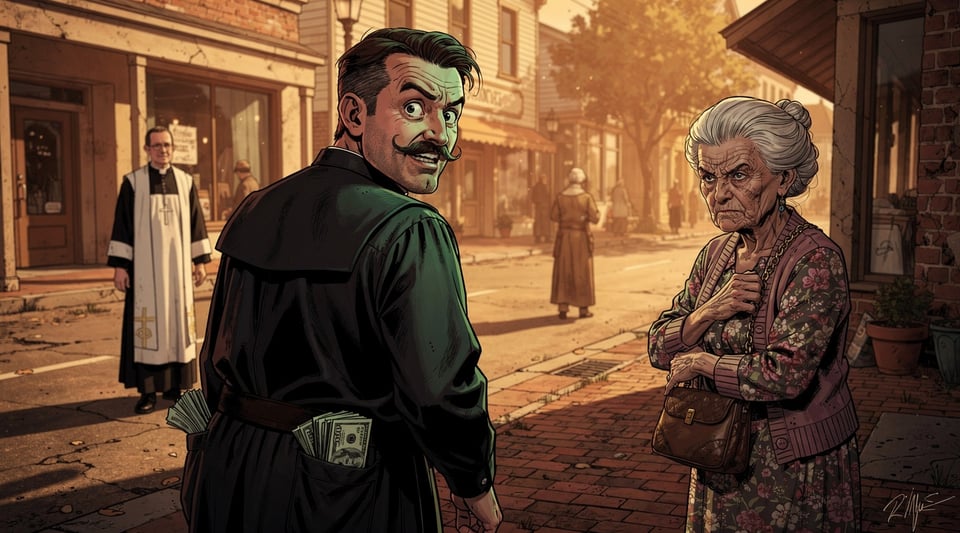
Alabama law makes it a misdemeanor to fraudulently pretend — by clothing or outward appearance — to be a minister, nun, priest, rabbi, or other member of the clergy in a public place. The law is real, but widely misunderstood: intent to deceive is the key element, not merely wearing a costume.
Statute history and origin
Alabama's clergy impersonation law began as Act No. 273, passed during the legislature's first extraordinary session of 1965. It was first codified as § 13-4-99 in the 1975 Code of Alabama, then renumbered to its current spot, § 13A-14-4, when Alabama's new Title 13A criminal code took effect on January 1, 1980. The wording itself hasn't changed since 1965 — only its address in the code.
Real-world clergy impersonation cases
Real-world cases show why such laws exist: a New York man posing as a priest performed baptisms, heard confessions, and defrauded a woman of retirement savings. A Boston man was arrested for dressing as a priest while depositing fraudulent checks across multiple bank accounts. In Pennsylvania, a fake priest borrowed money from unsuspecting victims.
Meaning of fraudulent intent
The critical word in Alabama's statute is 'fraudulently' — meaning you need deceptive intent, not just a clerical collar. Legal scholars note that this distinction matters: wearing a priest costume to a Halloween party is almost certainly protected expression under the First Amendment. However, wearing that same costume to solicit donations or perform religious rites you're not authorized to perform could cross the line.
Comparison with other states laws
Alabama is the only US state with a law specifically targeting clergy impersonation by dress; other states like New York and Pennsylvania handle similar conduct under broader criminal impersonation statutes requiring fraudulent intent.
Where the story gets it wrong
The law is often framed online as making it illegal to 'dress as a priest,' full stop. This is misleading: the statute requires fraudulent intent to deceive others, not simply wearing religious attire as a costume or for theatrical or satirical purposes. Courts interpret impersonation laws narrowly, so a Halloween costume without deceptive intent falls outside the law's scope.
Some sources claim states like New York, Pennsylvania, and Massachusetts have clergy-specific impersonation laws equivalent to Alabama's. In fact, those states rely on general-purpose criminal impersonation statutes requiring fraudulent intent, rather than laws specifically targeting clergy dress.
Whoever, being in a public place, fraudulently pretends by garb or outward array to be a minister of any religion, or nun, priest, rabbi or other member of the clergy, is guilty of a misdemeanor and, upon conviction, shall be punished by a fine not exceeding $500.00 or confinement in the county jail for not more than one year, or by both such fine and imprisonment. (Acts 1965, 1st Ex. Sess., No. 273, p. 381; Code 1975, §13-4-99.)
- Current status
- Rarely Enforced
- Enacted
- February 16, 1965
- Penalty
- Misdemeanor: fine up to $500, county jail up to one year, or bothFine: up to USD500Imprisonment: 1 year
- Jurisdiction
- Confirmed active in Alabama (§ 13A-14-4). General criminal impersonation statutes covering fraudulent clergy impersonation also exist in New York, Pennsylvania, Massachusetts, and Washington D.C., but none are as specific to clergy dress as Alabama's law.