“Massachusetts fines anyone who plays the Star-Spangled Banner as dance music or in a medley”
True. Massachusetts General Laws chapter 264, section 9 makes it an offence to play, sing or render the Star Spangled Banner in a public place other than as a whole and separate composition, or as dance music, an exit march or part of a medley, with a fine of not more than one hundred dollars. The 1917 statute is still on the books.
A wartime law to protect the anthem
Massachusetts adopted the statute in 1917, the year the United States entered the First World War, as one of several state measures meant to shield the song from what legislators saw as disrespectful treatment. It sits in chapter 264 of the General Laws, the chapter on crimes against governments, alongside flag desecration and sedition provisions. The wording is precise: the anthem may be performed in a public place only as a whole and separate composition or number, without embellishment or addition in the way of national or other melodies, and never as dance music, as an exit march or as part of a medley of any kind. The penalty is a fine of not more than one hundred dollars.
The night Boston police came for Stravinsky
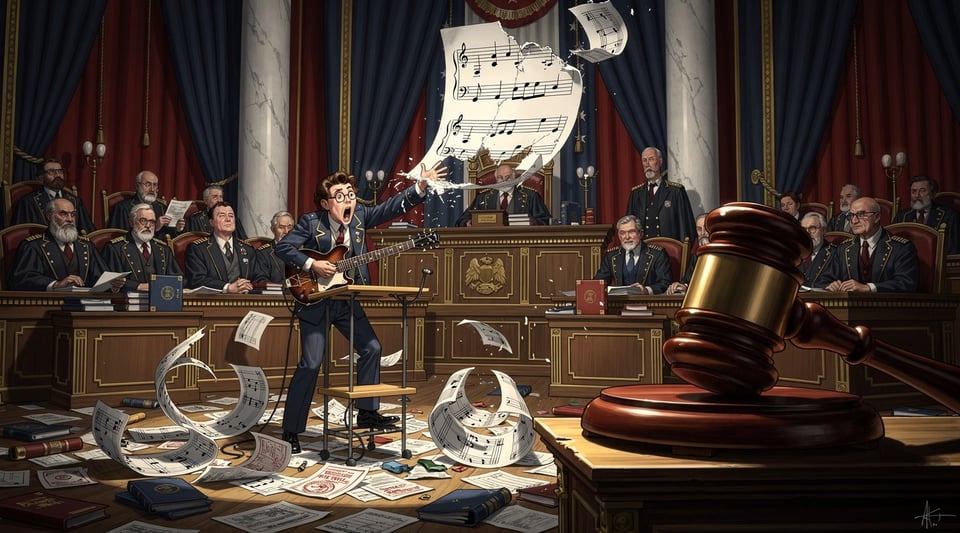
The law's one famous brush with enforcement came in January 1944. Igor Stravinsky conducted the Boston Symphony Orchestra in his own reharmonised arrangement of the Star-Spangled Banner on Thursday 13 and Friday 14 January without official interference, though the Friday concert drew national press attention for the unfamiliar harmonies. For the Saturday broadcast concert, Boston Police Commissioner Thomas Sullivan and Captain Thomas J. Harvey of the department's so-called Radical Squad attended Symphony Hall with a copy of the General Laws, prepared to pursue charges if the arrangement was played. Stravinsky switched to the orchestra's traditional arrangement instead. He was never arrested, and the well-known photograph often described as his mug shot is nothing of the kind.
Still on the books, probably unenforceable
The section has not been repealed or amended and appears in the current online General Laws without qualification. Whether it could actually be applied is another matter. Legal commentators note that embellishing a performance of the national anthem would today be treated as protected expression, and that a law compelling a single orthodox version would very likely fall to a First Amendment challenge. Nobody appears to have been fined under it, and the Stravinsky episode ended without a charge being laid.
Where the story gets it wrong
Stravinsky was arrested in Boston for his arrangement of the anthem. He was not. Police attended a January 1944 Boston Symphony concert ready to act if he played it, and he chose the traditional arrangement instead; the famous photograph is not a mug shot.
The law forbids singing the anthem badly or off key. It does not. It regulates the form of a public performance: it must be a whole and separate composition without added melodies, and not dance music, an exit march or part of a medley. Ordinary flat singing is not covered.
Whoever plays, sings or renders the ''Star Spangled Banner'' in any public place, theatre, motion picture hall, restaurant or café, or at any public entertainment, other than as a whole and separate composition or number, without embellishment or addition in the way of national or other melodies, or whoever plays, sings or renders the ''Star Spangled Banner'', or any part thereof, as dance music, as an exit march or as a part of a medley of any kind, shall be punished by a fine of not more than one hundred dollars.
- Current status
- Never Enforced
- Enacted
- January 1, 1917
- Penalty
- A fine of not more than one hundred dollars.Fine: up to USD100
- Jurisdiction
- Applies statewide in Massachusetts to performances in any public place or public entertainment.